
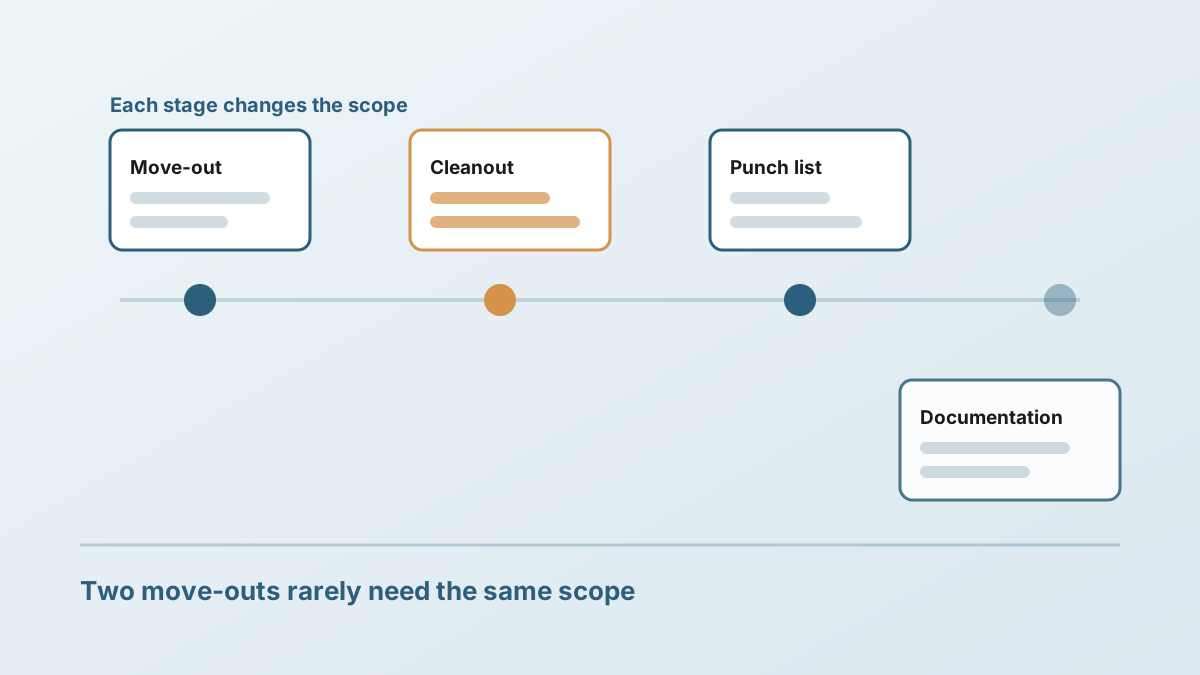
Why two move-outs rarely cost the same
Ask two landlords what a turnover costs and you will get two very different answers, even if their units are the same size. That is not because one is being overcharged. It is because the number reflects what the outgoing tenant left behind, and that varies enormously.
A unit vacated by a tenant who cleaned as they went, patched their nail holes, and took everything with them may need little more than a clean and a walkthrough. A unit vacated with furniture still inside, a refrigerator full of food, damage behind a television mount, and a garage that has become a storage unit is a fundamentally different job — more labor, more removal, more repairs, and usually more days of vacancy.
This is why a standard "move-out package" price tends to be misleading in both directions. It overstates the cost of a clean move-out and understates the cost of a difficult one. The workable approach is to assess the unit, define the scope, and quote that — with the understanding that the scope can shift once work begins and something behind a wall or under a cabinet becomes visible.
What determines a turnover scope
Six variables account for most of the difference between one turnover and another. If you manage more than a handful of units, these are also the variables worth tracking over time — patterns tend to emerge about which units and which tenancies produce the costliest work.
Condition at move-out
The starting point for everything else. A unit left reasonably clean and undamaged requires a different level of effort than one that has been neglected for a year. Condition also determines how much falls into repair versus preparation.
Volume of items left behind
Anything that has to be removed before work can start adds labor, disposal, and often a day. Furniture, appliances, and accumulated belongings left in a unit are one of the most common reasons a turnover runs long.
Approved punch-list work
The list of repairs and touch-ups between tenants. This is where owner decisions matter most — an approved list that is clear and complete lets work proceed without stopping, while an ambiguous one tends to generate back-and-forth that costs days.
Cleaning depth required
A standard turnover clean and a deep clean after a long tenancy are different services. Appliances, blinds, baseboards, and any pet-related work are the usual swing factors.
Exterior and common areas
For a single-family rental, exterior condition affects how quickly the property shows. Pressure washing, landscaping, and curb appeal work are sometimes bundled into the turnover and sometimes handled separately — worth confirming in the scope.
Documentation requested
Some owners want a photo record from move-out and another at make-ready. Others want less. Documentation takes time to produce, but it is frequently the part of a turnover that proves most useful months later.
Breaking the work into stages
Turnovers are easier to budget and to manage when they are understood as a sequence rather than a single block of work. Each stage has its own scope and its own cost drivers, and each one depends on the stage before it being finished.
Move-out assessment. The unit is walked and its condition recorded, ideally with photos. This stage sets the scope for everything that follows, and it is also the point at which anything that needs an owner decision should be identified.
Cleanout and removal. Items left behind are removed so the unit is clear. Nothing else can proceed efficiently while the space is still occupied by belongings.
Punch-list and repair work. Approved maintenance and small repairs, plus touch-ups. Where a repair requires a licensed trade, that has to be scheduled and coordinated — and coordination time is part of the turnover, not separate from it.
Deep cleaning and preparation. The unit is cleaned and made ready for showing and occupancy.
Make-ready documentation. A final record of the unit's condition at the point it is ready, which becomes the reference point for the next tenancy.
The rental property turnover checklist for Sarasota and Manatee County walks through each stage in detail, and coordinating vendors during a turnover covers what to do when a licensed trade has to be brought in.
If a unit is left full and needs to be emptied before anything else can happen, that is a cleanout rather than a punch-list item. Estate & whole-house cleanout services covers clearing an entire property, and the estate and whole-house cleanout cost guide explains how that scope is priced.
Need a turnover scoped quickly?
Send us photos of the unit and any punch-list notes you have. We will define the scope, tell you what it will take, and flag anything that may need a licensed trade.
Request Property ServiceVacancy days are the real cost
It is easy to focus on the invoice for the work and lose sight of the number that is usually larger: the rent that does not arrive while the unit is not rentable.
A turnover that takes three weeks instead of one is not two weeks more expensive in labor. It is two weeks of lost rent on top of the labor — and for most rentals in this market, that lost rent exceeds the entire cost of the work being done. This is why the single most valuable thing a turnover process can do is shorten the calendar, not reduce the invoice.
That reframing changes how decisions get made. A punch-list item that costs more to fix quickly may be worth paying for if the alternative is an extra week empty. A delayed decision from an owner costs rent, not just goodwill. And a scope that is clear from the start tends to prevent the mid-work pauses that quietly add days.
Property managers tend to think in these terms already. For an individual landlord managing one or two units, it is worth running the arithmetic on your own property once — the daily rent figure — and keeping it in mind the next time a turnover decision feels like a close call.
- Know your daily rent figure, so the cost of an extra vacancy day is concrete.
- Approve the punch list in one pass rather than piecemeal, so work does not stall waiting on decisions.
- Schedule trades early — licensed work is usually the longest lead item in a turnover.
- Have the cleanout happen first, so repair and cleaning work is not blocked by belongings.
- Get a documented condition record at move-out, before any work changes what the unit looks like.
- Confirm who is authorized to approve additional work if something is found mid-turnover.
How to reduce turnaround time
Most of the time lost in a turnover is lost to sequencing and waiting, not to the work itself. A few habits consistently shorten the calendar.
Assess before the tenant leaves. Where it is possible and appropriate, a pre-move-out walkthrough lets you start planning the scope while the unit is still occupied. It also gives the outgoing tenant a chance to address something before it becomes a deduction question.
Sequence for the longest lead item. If a licensed trade is needed, that scheduling should start first, with cleanout and preparation built around it. Waiting until the unit is clean to call a trade adds their lead time to the calendar unnecessarily.
Decide once. Batch the approval decisions. A punch list approved in one pass at the start moves far faster than one approved item by item over several days.
Keep a running unit record. Knowing what a unit needed at its last two turnovers makes the next scope easier to set — and makes it obvious when a recurring issue is worth addressing properly rather than patching each time.
One boundary worth keeping in mind: prompt move-out preparation is not the same thing as a legal determination about a deposit or about a tenant's obligations. Those questions are governed by law and by the lease. Turnover work records what the unit looks like and returns it to a rentable condition; sorting out responsibility is a separate matter for the appropriate qualified professional.
If a unit is likely to sit empty between tenants for longer than expected, it is also worth understanding how your coverage treats that gap. Insurance policies vary. Property owners should review their individual policy and ask their insurer or agent about vacancy, unoccupancy, inspection, maintenance, or notification requirements. Vacancy periods are not defined the same way by every policy, and a turnover schedule is not a substitute for that conversation.
Documentation that pays for itself
Documentation is usually the first line item owners try to trim from a turnover scope. It is also the one that most reliably earns its cost, because it is the only part of the turnover that is still useful a year later.
A documented turnover record typically means a dated photo set and written observations from move-out, and a second set from make-ready. Together they establish what the unit looked like when the previous tenancy ended and what it looked like when it was ready for the next one. That is the reference point for the next move-out assessment, and it turns a years-later question about condition into something that can be answered rather than recalled.
It is worth being precise about what this record is. It is a set of visible observations made at a point in time, organized and dated. It is not a licensed home inspection, it does not diagnose, and it cannot guarantee that every issue will be found — a problem behind a wall, inside an appliance, or beneath flooring is not visible during a walkthrough. Where a repair requires licensed work, the appropriate step is to coordinate with the appropriate licensed professional where required.
Owners managing multiple units often find that the documentation habit changes how they operate. Scopes get easier to set, recurring issues become visible across a portfolio, and the conversation at the next turnover starts from a record rather than from memory. For more on that, see turnover documentation best practices.