
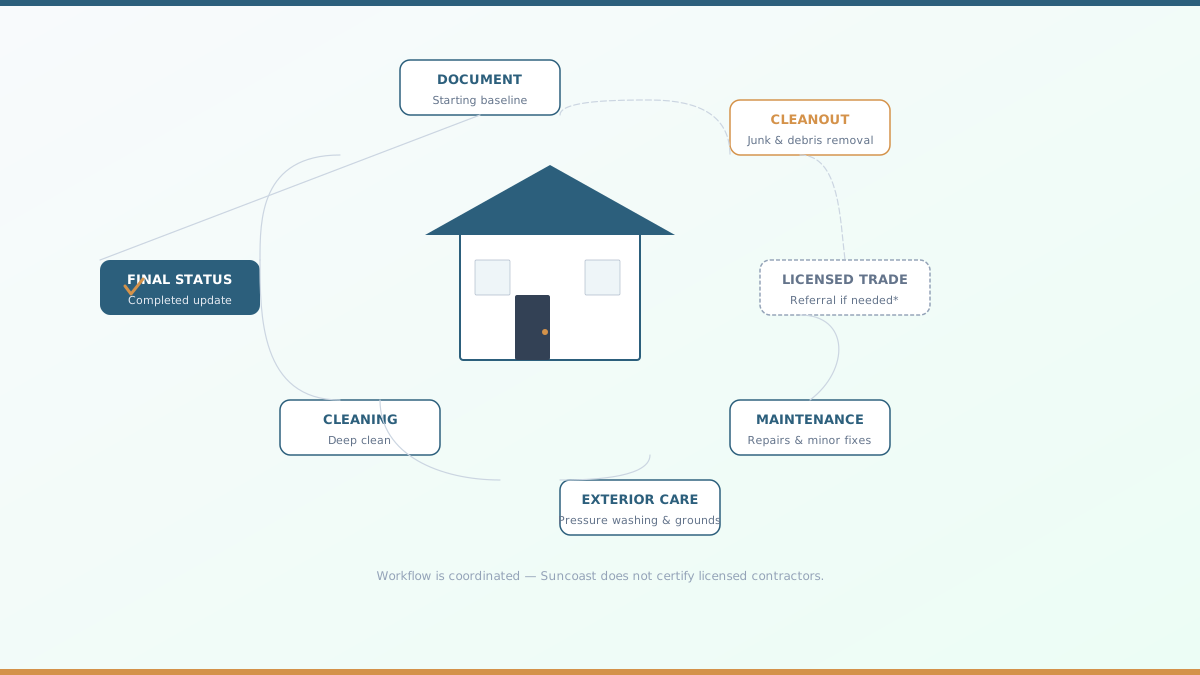
1. The Core Turnover Sequence
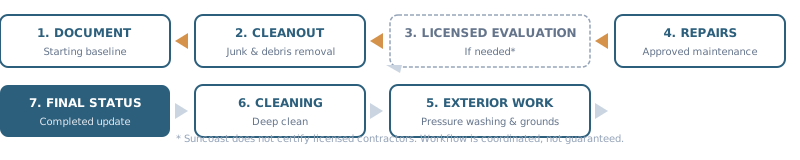
At a high level, a turnover moves through a predictable sequence:
- Document move-out conditions — before anything is moved, cleaned, or repaired
- Clear out the property — remove tenant belongings, debris, and anything that shouldn’t convey
- Perform repairs and maintenance — address punch-list items while the property is empty
- Clean interior surfaces — after repairs, not before, so dust and debris from repair work don’t require re-cleaning
- Paint and perform surface work — after repairs, before the final clean
- Clean exterior surfaces — pressure washing, walkway maintenance, and exterior presentation
- Final walkthrough and move-in documentation — confirm work is complete and document move-in conditions
When providers are scheduled out of sequence — cleaning before repairs, painting before debris removal — rework is almost guaranteed.
Turnover Coordination Sequence
Need help coordinating a multi-vendor turnover?
Suncoast manages the full turnover sequence — documentation, cleanout, repairs, and final readiness — throughout Sarasota and Manatee Counties.
Request an Estimate2. Step 1: Document Move-Out Conditions
Move-out documentation — dated photographs of every room, every wall and ceiling surface, inside cabinets, closets, and appliances, all visible plumbing connections, all floor areas, and the full exterior — should be the first activity at the property after the tenant departs. This creates the baseline against which turnover work is planned and security-deposit decisions are informed.
Move-out documentation should happen before any vendor touches anything. Once cleaning or repair work begins, the original condition is altered and the record is incomplete.
3. Step 2: Clear Out the Property
After documentation, everything that should not remain at the property should be removed. This includes:
- Tenant belongings left behind
- Furniture or items that are not part of the property
- Debris or accumulated materials
- Appliances or equipment scheduled for disposal
- Any item the lease or turnover plan identifies for removal
A clean property — empty of everything except the structure, installed fixtures, and approved items — is the starting point for all subsequent work. Repairs and cleaning are harder and slower when performed around leftover items.
4. Step 3: Perform Repairs and Maintenance
With the property empty, all approved repairs and maintenance items can be addressed. This is the step where a punch list — organized by room, with each item described and prioritized — becomes the working document.
Repairs should be the first hands-on activity after clearout, not the last. Repair work creates dust. It can involve opening walls or fixtures. When repairs are scheduled after painting or cleaning, the new work often damages or dirties what was just finished.
Suncoast handles visible, non-regulated repair and maintenance items that fall within the scope of general property services — hardware replacement, minor drywall patching, fixture swap-outs, caulking, and similar tasks. Electrical, plumbing, HVAC, roofing, and structural items should be addressed by the appropriate licensed professional.
5. Step 4: Clean Interior Surfaces
Interior cleaning — floors, bathrooms, kitchen, surfaces, baseboards, windowsills, and all accessible interior areas — should happen after repair and maintenance work is complete. This ensures that cleaning is performed once and is not undone by dust and debris from repair work the next day.
One practical approach: after repairs are complete, do a walkthrough specifically to check for construction debris, drywall dust, or loose hardware that may have been left behind by the repair work. Addressing these before the cleaning crew arrives means the cleaners can focus on cleaning surfaces rather than chasing construction residue.
6. Step 5: Paint and Surface Work
Painting and surface preparation should follow cleaning — not precede it — so surfaces are free of dust and debris before paint is applied. Painting should also occur before exterior cleaning if the exterior of the property is involved, since pressure washing near fresh exterior paint can affect the finish.
Another sequencing consideration: if the property has been deep-cleaned before painting, drop cloths and painter’s tape are sufficient to protect clean surfaces during paint work. If painting is done before cleaning, the cleaning crew will need to remove paint dust and splatter from surfaces that were already painted — effectively doing the same work twice.
7. Step 6: Exterior Cleaning and Maintenance
Exterior cleaning — pressure washing of driveways, walkways, patios, and building exteriors — is typically one of the final steps. It should be scheduled after interior work is complete so exterior surfaces are not walked on by crews moving in and out with materials and equipment.
8. Step 7: Final Walkthrough and Move-In Documentation
The final walkthrough confirms that all approved work is complete, the property is clean and ready, and no items were overlooked. This is also the opportunity to create move-in documentation — dated photographs and written notes of every room, surface, and visible condition — so the next tenancy begins with an organized baseline.
A move-in documentation set is the reference point for the move-out that will happen at the end of the next tenancy. Without it, everything discovered at that future move-out has no baseline to compare against.
9. Communication Across Providers
Good communication across providers keeps a turnover on track. Practical approaches include:
- A shared schedule so every provider knows the sequence and what work precedes and follows theirs
- A single point of contact — one person or company responsible for communicating schedule changes and resolving conflicts
- Written approval for work beyond the original scope — no provider should expand the scope without documented authorization
- Photographs and written notes at each step so the owner or manager can confirm work quality and progress without being on site for every activity
- Clear identification of which provider is responsible for which scope — avoiding gaps where two providers each assumed the other would handle an item
A common friction point: two providers arrive on the same day and realize they both need access to the same space, or that one provider’s work prevents the other from starting. A simple shared schedule — a document listing each provider, their scope, and the date and time they are expected on site — prevents most of these conflicts before they happen.
Another practical approach is to ask each provider to photograph their completed work before leaving the property. This creates a record of what was done and when, which is particularly useful when the owner or manager cannot be on site for every activity. It also helps the person responsible for the final walkthrough confirm that all approved work was completed without needing to contact every provider individually.
10. How Suncoast Coordinates a Multi-Provider Turnover
Suncoast’s Rental Turnovers & Punch Lists service is designed around the turnover sequence described above. A Suncoast-coordinated turnover includes:
- Move-out documentation — before any other work begins
- Junk removal and cleanout — clearing the property of everything that should not convey
- Punch-list repairs — visible, non-regulated maintenance items, hardware replacement, minor drywall patching
- Interior cleaning — surfaces, floors, bathrooms, kitchens, and accessible areas
- Pressure washing — driveways, walkways, patios, and exterior surfaces
- Move-in documentation — organized, dated photography and written records of the final condition
When a turnover requires a licensed professional — HVAC, plumbing, electrical, roofing, structural — Suncoast coordinates with the owner’s or manager’s preferred provider. Scheduling is organized so the licensed professional’s work fits into the turnover sequence without forcing cleaning or painting to be redone.
This coordination approach means the owner deals with one point of contact who understands the full sequence, rather than calling each provider individually and asking them to schedule around the others. The owner approves the scope and the providers; Suncoast manages the logistics of when each provider arrives and in what order.