
1. What Should Turnover Documentation Include?
A turnover record should be able to answer: what was the visible condition of this property at this point in the tenancy cycle, and what work was completed between? Everything useful serves one of those two questions.
Practically, that means capturing:
- Dated photographs of every room — walls, ceilings, floors, fixtures, and appliances, from consistent angles
- Exterior photographs — elevations, entry, driveway, walkways, and any outdoor structures
- Dated photographs of existing visible damage or wear, with something for scale where size matters
- Written notes describing visible condition and any known maintenance items
- Utility meter readings where relevant to the handover or the accounting
- Detector presence and dated status where that is part of your property standard
- Photographs of completed work at the point it was finished, not only the final state
- A record of keys and access credentials issued and returned
Want consistent documentation across your portfolio?
Suncoast provides organized visual property documentation at move-in, move-out, and turnover throughout Sarasota and Manatee Counties.
Request Property Service2. Consistency Matters More Than Volume
The single most common mistake in turnover documentation is producing a large, inconsistent file — two hundred photographs taken ad hoc, from whatever angle seemed natural at the time, with no sequence and no clear starting point.
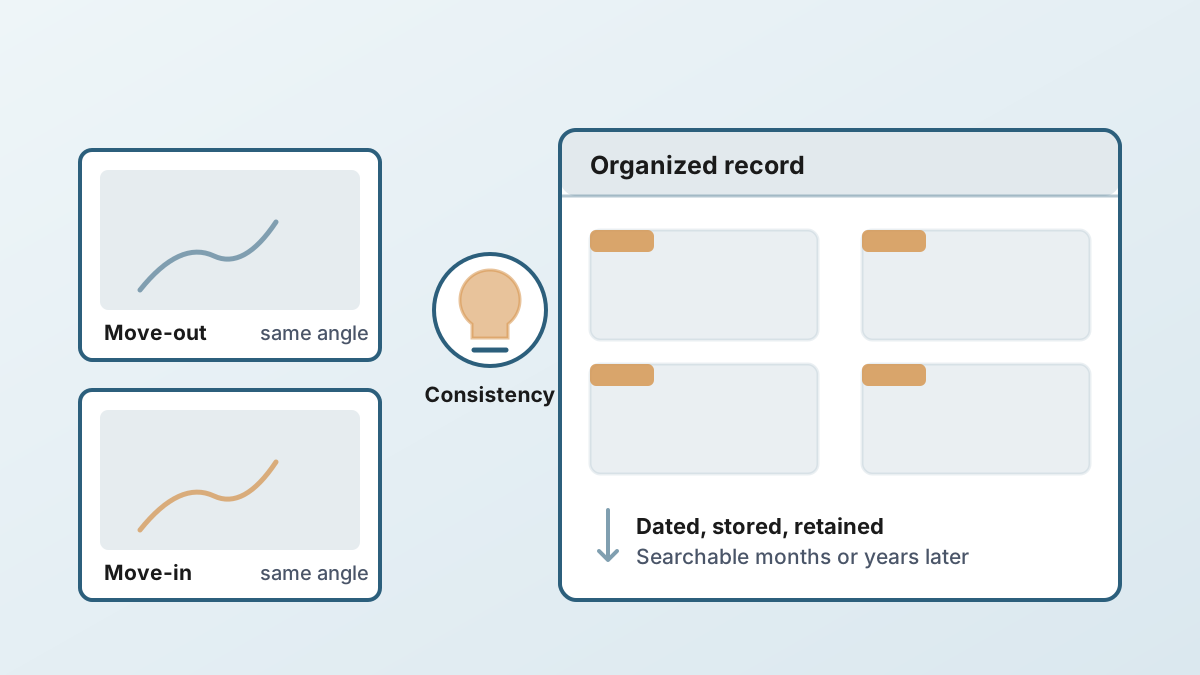
That record is difficult to use, because the question you will eventually ask is comparative: was this here before? Answering that requires two photographs of the same thing, taken the same way, at different times. Volume without consistency does not get you there.
A better approach is a fixed walkthrough sequence that you use every single time:
- Start at the entry and move through the property in one direction, room by room
- Within each room, work clockwise from the doorway — the same order every time
- Capture a wide shot and then any detail worth noting
- Finish with the exterior, again in a fixed order
Once the sequence is fixed, comparison becomes straightforward, and a reviewer can find a specific area without searching.
3. Shoot the Same Angles Every Time
Framing consistency is what makes two photographs comparable. A few habits get you most of the way:
- Shoot from the doorway of each room, so the frame includes the whole space consistently
- Stand in approximately the same spot at approximately the same height
- Use the same orientation — landscape for room context, portrait where height matters like a wall or ceiling
- Include a fixed reference in frame where you can — a window, a doorway, a fixture — so the scale reads
- Photograph anything you are flagging from two distances: a wide shot for context and a close shot for detail
- Use a scale reference for cracks, stains, or damage where size is the point
Date-stamping matters too, and most modern phone cameras embed the date. Confirm that the setting is on, because a record whose dates are uncertain loses much of its value.
4. Sequence the Record Across the Turnover
A turnover has distinct moments, and the record is more useful when it captures each one rather than a single snapshot at the end.
- At move-out, before any work begins. This is the condition at the end of the tenancy, and it is the record that matters most for deposit discussions.
- At the point work is completed. Documenting what was actually done, while the work is visible.
- At final readiness, immediately before the next occupancy. This becomes the next tenant's move-in baseline.
Keeping those three moments separate — rather than blending them into one file — is what lets you answer the question that comes up later, which is almost always about one specific point in time.
5. What Not to Document
Discipline about scope protects the record and the tenancy:
- Personal belongings. The purpose is property condition, not the contents of someone's home.
- People. Do not photograph occupants or their guests.
- Housekeeping judgments. Document visible condition, not opinions about tidiness.
- Anything you are not authorized to photograph. Where access is limited by the terms of the visit, stay within it.
- Speculative diagnosis. "There is staining on the ceiling" is a record. "There is a roof leak" is a conclusion you are not qualified to reach, and recording it as fact creates problems later.
That last point is worth emphasizing. A visual record should describe what is visible and let a licensed professional determine cause. Precise observations age far better than confident conclusions.
6. Storing Records So They Are Actually Usable
A record you cannot retrieve is the same as no record. Storage decisions made once save repeated effort later.
- Store in one consistent location, organized by property and then by date
- Use a structure that makes sense to someone other than the person who took the photographs
- Keep records accessible from anywhere rather than only on one device
- Retain across tenancies rather than clearing between them — the value is in the long baseline
- Back up rather than relying on a single copy
- Note the storage location somewhere so a colleague or successor can find it
If a property changes hands or management, a coherent documented record is one of the more valuable things you can hand over.
7. How Documentation Helps at the Next Turnover
The return on consistent documentation shows up at the next turnover, which is why it is easy to under-value in the moment.
- A move-in baseline makes end-of-tenancy comparison straightforward rather than a judgment call
- It distinguishes pre-existing visible conditions from new ones
- It informs what belongs on the next punch list, because you know what was previously addressed
- It provides a record of completed work, useful when the same item resurfaces
- It shortens the next documentation pass, because the sequence and the angles are already established
- It supports a clearer conversation with ownership about the property's actual condition over time
A landlord or manager who documents consistently for a few years ends up with something genuinely useful: a dated visual history of each property, rather than a folder of files nobody opens.
8. Turnover Documentation Checklist
- Use a fixed walkthrough sequence every turnover
- Work clockwise from the doorway in each room
- Shoot from a consistent position and height
- Capture a wide shot and a detail shot for anything flagged
- Include a scale reference for cracks, stains, or damage
- Confirm date stamping is enabled
- Document interior rooms, walls, ceilings, floors, and fixtures
- Document the exterior elevations, entry, and outdoor structures
- Record at move-out before any work begins
- Record at the point work is completed
- Record at final readiness before next occupancy
- Note utility meter readings and detector status where relevant
- Record keys and access credentials issued and returned
- Describe visible conditions rather than diagnosing causes
- Avoid photographing belongings, occupants, or housekeeping
- Store by property and date, accessible from anywhere, with a backup
- Retain records across tenancies