
1. Why Small Tasks Are the Hardest to Schedule
Small tasks resist scheduling for structural reasons, not because anyone is disorganized:
- The overhead exceeds the task. Driving to a property for one fifteen-minute item costs more than the item.
- They arrive continuously. Requests come in from tenants, owners, and your own walkthroughs at unpredictable intervals.
- They are hard to price individually. Each one is too small to justify its own estimate.
- They get interleaved with tenant communication. The request, the follow-up, and the scheduling all run through the same channel.
- They are easy to lose. A request captured in a phone call and never written down does not exist until someone follows up.
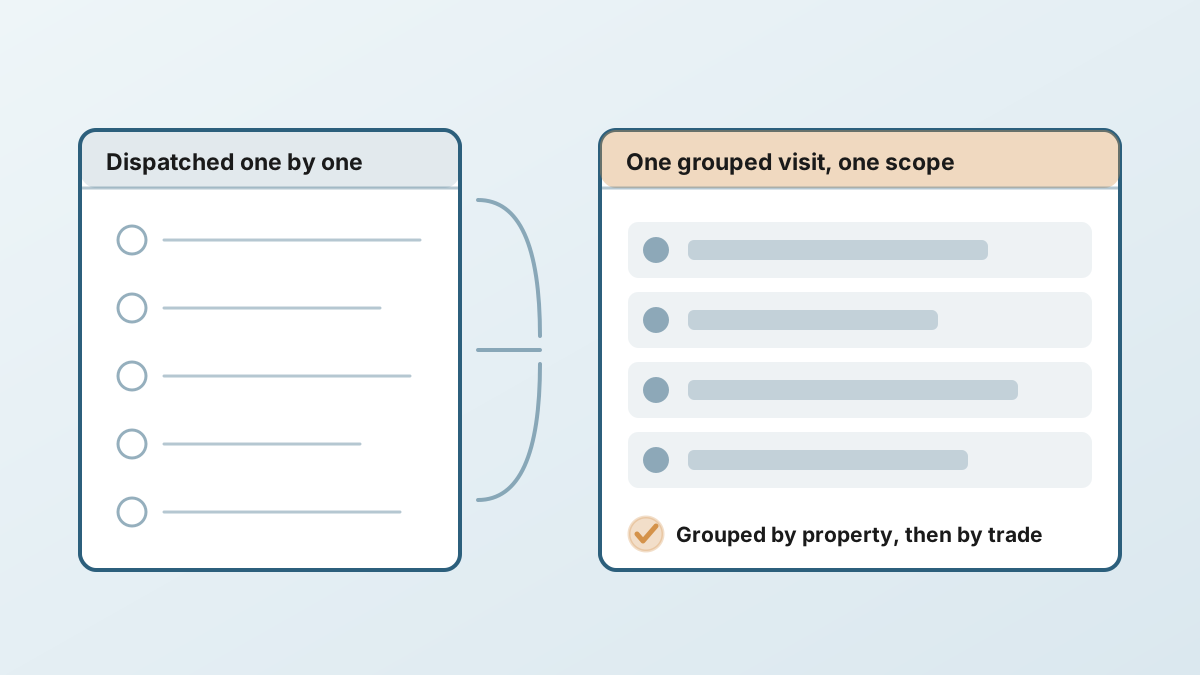
The fix is not working faster. It is changing the unit of work from a single task to a grouped visit.
Managing a spread-out task list?
Suncoast handles grouped minor maintenance and recurring property tasks across Sarasota and Manatee Counties.
Request Property Service2. Collect Requests Before Dispatching Anyone
The most expensive habit in property task coordination is dispatching on arrival — sending someone out the moment a request comes in.
Instead, hold requests in a single list and act on them on a cadence:
- One list, not several — a shared document or a task board rather than text threads and memory
- Capture every request at the moment it arrives, even if you will not act on it immediately
- Set a review cadence — a day each week when you look at the whole list and decide what batches
- Give each entry enough detail to act on without a follow-up question
- Note whether the item is time-sensitive, since genuine urgency should bypass the batch
The exception is real urgency — an active leak or a safety concern. Those should be addressed immediately and not held for a batching cycle.
3. Group by Location First, Then by Trade
Location is the first sort because travel is the dominant cost in small task work. Trade is the second sort because different skills mean different people.
The grouping logic, in order:
- By property. Everything outstanding at one address, regardless of type, is the base unit.
- By proximity. Where several properties are clustered — within the same community or a few minutes apart — group those visits together.
- By trade. Within a property, separate work that needs a licensed trade from general property work.
- By sequence. Where one task unblocks another, order them so the blocked work follows rather than precedes.
A grouped visit handles six small items in one appointment. The same six dispatched individually consume six appointments, six access arrangements, and six sets of overhead.
4. Separate Licensed Work From General Work
This is not a scheduling preference — it is a genuine boundary. General property care and licensed trade work are different categories, and batching them together creates real risk.
- Licensed work — plumbing, electrical, HVAC, roofing, structural, pest control, mold assessment. These require an appropriately qualified professional.
- General property work — minor repairs within scope, cleanouts, exterior cleaning, visual checks, recurring upkeep, punch-list follow-up.
When a task list is assembled, sort it into those two buckets first thing. The licensed items get scheduled with the appropriate trade directly. The general items are what you group into a batched visit.
Attempting to bundle a plumbing repair into a general maintenance visit does not save time. It creates a scope problem and, depending on the work, a compliance problem.
5. Set a Threshold for What Gets Batched
Not every task should wait for a batch, and not every urgent-seeming request is urgent. A defined threshold removes the need to decide case by case.
A workable set of rules:
- Anything involving active water, safety, or habitability goes immediately and bypasses batching
- Anything requiring a licensed trade is scheduled with that trade on its own track
- Everything else holds to the weekly review and batches with other work at the same property
- If a property accumulates several batched items, schedule it before the list gets long — frequency beats size
- If a property has only one small item, consider holding it one cycle rather than making a dedicated trip
The threshold only works if it is written down and applied consistently. A batching rule that gets overridden by whoever asks most persistently is not a rule.
6. Give One Scope, Not Five Messages
Once tasks are grouped, they should go out as a single written scope per property rather than a series of individual requests.
A consolidated scope should include:
- The property address and the access arrangement
- Each task listed separately, with enough location detail to act on it without asking
- Photographs attached to the relevant line item where the task is visual
- What is explicitly excluded, so the boundary is clear
- The service window rather than an exact arrival time
- How out-of-scope findings should be handled — reported, not completed
- What completion reporting you expect back
One document per property per visit is easier to action, easier to price, and much easier to reference later than a thread of separate messages.
7. Track What Was Completed and What Waits
The task list is not finished when the work is dispatched — it is finished when completed items are closed and deferred items are carried forward deliberately.
- Close completed items against the scope, not against a general "visit happened"
- Carry forward anything that could not be completed, with the reason recorded
- Record out-of-scope findings as new, separate items for a decision rather than letting them disappear
- Note items that went to a licensed trade, so you can confirm they were addressed
- Keep the completion record for the property, since it becomes part of the property's documented history
The carrying-forward step is what stops a task list from quietly losing items. An item that is neither completed nor carried forward is one nobody will remember until it resurfaces as a larger problem.
8. Small Task Coordination Checklist
- Keep one shared task list rather than several channels
- Capture every request at the moment it arrives
- Set a weekly review to decide what batches
- Fast-track anything involving water, safety, or habitability
- Sort the list by property address first
- Group visits by proximity across clustered properties
- Separate licensed trade work from general property work
- Sequence tasks so blocking work happens first
- Apply a written threshold for what waits for a batch
- Send one consolidated written scope per property
- Attach photographs to the relevant line items
- State the service window rather than an exact time
- State what is excluded and how out-of-scope work is handled
- Close items against the scope, not against the visit
- Carry forward incomplete items with a recorded reason
- Log out-of-scope findings as new items for a decision
- Keep completion records with the property history