
1. Why Vendor Access Breaks Down
Almost every access failure comes from one of a small number of causes, and each is preventable with setup that takes minutes:
- Nobody has a working key. The lockbox code changed, the key was never returned, or the last person to use it still has it.
- The alarm is armed. A code was never provided, or was provided to someone different from the person attending.
- Community or gate access. The property sits inside a managed community and the vendor has no gate instructions.
- Utilities are off. Work that needs water or power cannot proceed.
- Ambiguity about who is going. Two people think the other is attending, or nobody was actually scheduled.
- An occupant was not informed. A tenant is present and surprised, and the appointment stops there.
None of these is a scheduling problem. They are all setup problems that surface on the day.
Need someone on site to meet a scheduled vendor?
Suncoast provides local field support and on-site access coordination throughout Sarasota and Manatee Counties.
Request Property Service2. Set Up an Access Method Before You Need One
Choose the access method for each property deliberately, and write down how it functions before anyone needs it.
The common options and what each requires from you:
- Lockbox. Requires a code you control, a code you can change, and a record of when it was last changed. Simple, but only as good as its code management.
- Smart lock. Allows per-person temporary codes, which solves the revocation problem cleanly. Requires working connectivity and a battery you monitor.
- Key held by a designated person. Works well with a consistent local contact, and requires that the arrangement survives staff changes.
- Keyed entry with the occupant. Appropriate for occupied properties where the tenant is willing to provide access, and requires notice per your lease.
Whichever you choose, the property needs one documented answer to "how does someone get in." Two competing methods is how the wrong person ends up with a key.
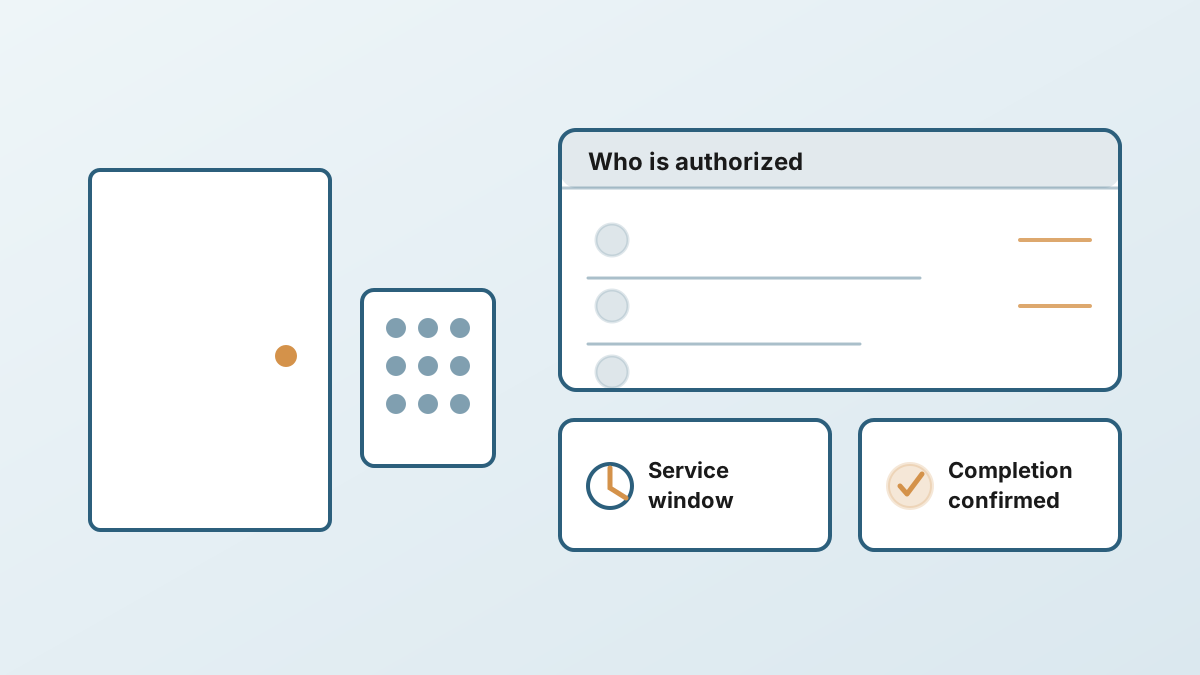
3. Record Who Is Authorized, and Keep It Current
Authorization should be a record, not a memory. At minimum, each property's authorized-entry list should capture:
- Who is authorized to enter, individually rather than by company name alone
- The basis for that authorization — scheduled work, standing arrangement, or one-off
- The date the authorization was granted
- The access method each person uses
- Whether the authorization is time-limited and, if so, when it expires
- Who to contact if an access attempt fails
The discipline of writing this down has a second benefit: it makes gaps visible. An authorization list that has not been reviewed in a year usually contains someone who should no longer be on it.
4. Schedule in Windows, Not Times
Committing to an exact appointment time for property work creates avoidable failure. Traffic, a longer previous job, and a supply run all push a schedule, and a vendor who is running late to a hard time slot will either rush or reschedule.
- Give a service window rather than a precise time — a half-day window is far more realistic than an hour
- Sequence trades rather than stacking them. Two vendors needing the same space at the same time is a scheduling conflict you created
- Front-load the work that unblocks other work, so a delay does not cascade
- Build in a buffer before any deadline that matters, such as a lease start date
- Confirm the day before, which catches the appointments that were never actually booked
5. Coordinate Around Occupants
For an occupied rental, access is as much a communication task as a logistics one. Getting this right protects the tenancy as well as the work.
- Provide notice in the form and timeframe your lease and applicable requirements call for
- State the purpose, the date and window, and who will be attending
- Give the occupant a way to flag a conflict before the day
- Keep the visit scoped to the property work rather than the tenancy
- Leave the property as found, and confirm that on completion
- Record that notice was given, and when
This guide is general information, not legal advice. Notice requirements vary and your lease governs in the first instance — confirm your obligations rather than relying on a general rule.
6. Confirm Completion, Not Just Attendance
"The vendor attended" and "the work was completed" are different facts, and only the second one matters. A completion confirmation should establish:
- That the work described in the scope was actually done
- Dated photographs of the result where the outcome is visual
- Anything found on site that falls outside the approved scope
- Anything that could not be completed, and the reason
- Items requiring a licensed trade, with enough detail to act on
- That access credentials were secured and the property left locked
Where the work is licensed trade work, the completion confirmation comes from that trade. Where the task is general property care or access coordination, a completion note with photographs is the useful record.
7. Revoking Access When a Relationship Ends
This is the step most often skipped, and it is the one with the longest tail. Access granted for one arrangement does not expire because the arrangement ended.
- Change lockbox codes whenever a standing arrangement ends
- Delete temporary smart-lock codes rather than leaving them to lapse
- Collect keys that were issued, and record the return
- Update the alarm code if it was shared broadly, and reissue narrowly
- Update the authorization record so it reflects reality rather than history
- Review the whole list on a set schedule — annually at minimum
A smart lock with per-person temporary codes makes this considerably easier than a shared physical key. That convenience is worth weighing at setup, because the revocation step is where shared access systems become a liability.
8. Vendor Access Checklist
- Choose one documented access method per property
- Record who is authorized individually, not by company alone
- Note the basis and date of each authorization
- Set expiry on time-limited access rather than leaving it open
- Provide gate and community access instructions where applicable
- Confirm utilities are on before scheduling work
- Give a service window rather than an exact time
- Sequence trades so they do not overlap in the same space
- Front-load work that unblocks other work
- Confirm the appointment the day before
- Give occupants notice in the form and timeframe required
- Record that notice was given, and when
- Require completion confirmation with photographs
- Capture out-of-scope findings as reports, not completed work
- Secure and lock the property on departure
- Rotate codes and collect keys when an arrangement ends
- Review the full authorization list at least annually