
Why cleanout pricing is not a per-room number
It would be convenient if a cleanout could be priced by counting bedrooms. In practice, two three-bedroom houses can produce radically different amounts of work. One may hold furniture and a few boxes. Another may hold forty years of accumulated belongings, a garage that has not been entered in a decade, and an attic with more in it than the living room.
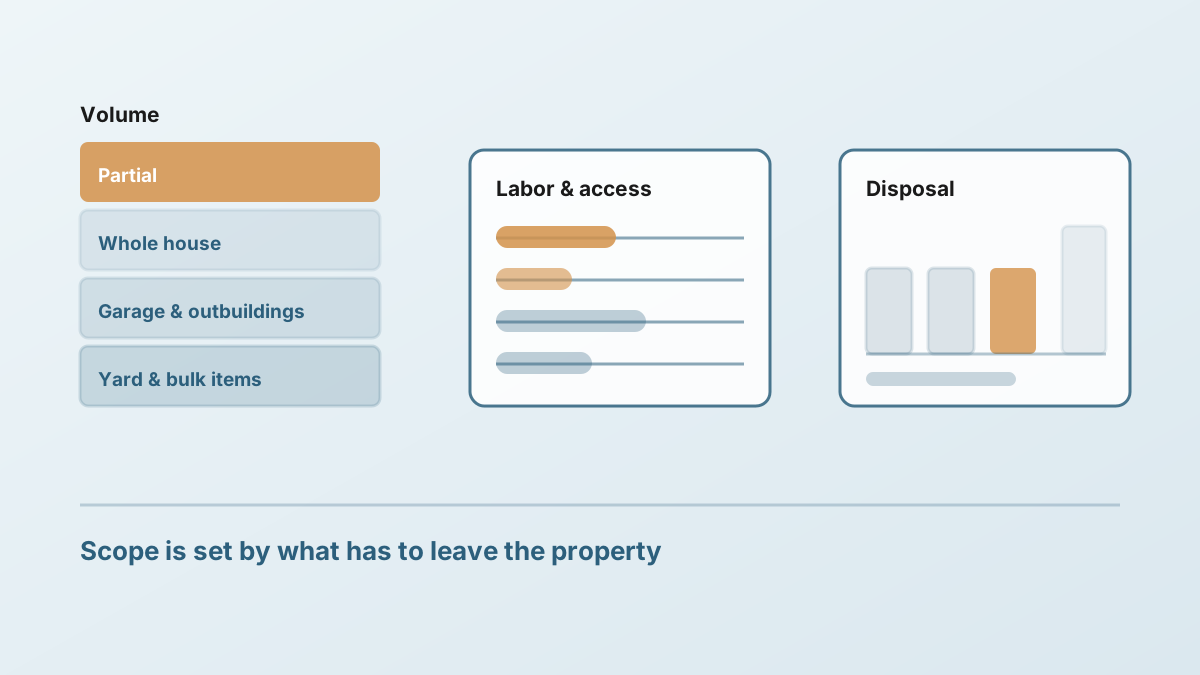
What a cleanout provider is pricing is not the house. It is the amount of material that has to leave the property, the labor required to get it out, and the cost of what happens to it afterward. Those three things are what change between properties, and they are why a phone estimate based on square footage tends to be wrong in both directions.
This is also why a provider who quotes a firm number before seeing the property is usually quoting something they cannot stand behind. A walkthrough — or at least photographs of each room, the garage, and any outbuildings — is what makes a cleanout quote meaningful.
The four factors that set the scope
Across the cleanouts Suncoast handles in Sarasota and Manatee County, four factors do most of the work in determining what a job involves.
Volume
The total amount of material to be removed. This is the single largest driver, and it is also the one owners most often underestimate, because belongings spread through closets, cabinets, garages, and storage areas add up faster than they appear to.
Labor and access
A single-story home with a wide driveway and a ground-floor entry is a very different job from a third-floor condo with an elevator reservation, a tight stairwell, or a long carry to where a truck can park. Distance, stairs, and doorways drive labor hours more than most owners expect.
Sorting and separation
If everything is going, the job is straightforward. If certain items need to be set aside for family, held for donation, or reviewed before disposal, that adds a careful pass through the contents — which is real time and real labor, though often worth it.
Disposal requirements
Most household contents can move through standard removal channels. Some categories cannot, and those need to be separated and routed correctly. This is the factor most likely to produce a surprise, which is why it is worth identifying early.
A fifth factor runs underneath all four: the timeline. A cleanout that can be scheduled across several days is a different job from one that must be completed before a closing date or a listing appointment. Tight timelines can require more people on site at once, and that is worth raising at the outset rather than discovering later.
What a cleanout typically includes
"Cleanout" can mean several different things, and the word is used loosely enough that it is worth confirming what is actually included before work begins. Most cleanouts cover some combination of the following.
Contents removal. Furniture, clothing, housewares, boxes, and general household goods removed from the interior. This is the core of most cleanouts.
Garage, attic, and outbuilding clearing. These spaces frequently hold more than the living areas, and they often hold the heaviest and most awkward items — which is exactly why they are worth walking through before a quote is given.
Appliance and large-item removal. Refrigerators, washers, dryers, water heaters, and similar items. These have their own handling and disposal considerations and are usually quoted separately from general contents.
Exterior and yard debris.Items that have accumulated outside — furniture, equipment, or debris on the property — are often included, but confirm it, because some providers scope exterior work separately.
Broom-swept condition. Most cleanouts leave a property clear and broom-swept. This is worth stating explicitly in the scope, because "cleanout" does not automatically mean the same thing to everyone. If a property needs a deeper clean, or exterior washing before a listing, that is usually a separate service.
If the property is being prepared for a listing, a showing, or a new occupant, the cleanout is often the first of several steps. Common move-out documentation mistakes covers what is worth recording at this stage so the property's condition is on the record.
For what the service itself includes and how it is arranged from first contact to completion, see estate & whole-house cleanouts in Sarasota and Bradenton.
Need a cleanout scoped before a deadline?
Send us photos of each room, the garage, and anything outside. We can define the scope and give you a number you can plan around — including a tight timeline.
Request Property ServiceSorting, keeping, and setting items aside
The part of a cleanout that owners most often underestimate is the decision-making. Making judgments about a lifetime of belongings is not a physical task, but it is the one that determines how long the work actually takes and what the result looks like.
The most effective approach is to do the deciding before the crew arrives, wherever that is possible. Define three categories in advance: items that stay with the family, items that should be held for donation or resale, and everything else. Mark or physically separate the first two — a labeled area, a closed door, a taped-off corner. When a crew knows exactly what is off-limits, the removal can proceed quickly and without hesitation.
It is also worth deciding in advance whether anyone wants to be present during the removal. Some families find it easier to have a last walkthrough before work begins and then step away entirely. Others prefer to be on site. There is no single right answer, but knowing which one applies saves everyone a difficult moment later.
One practical caution: if there is any question about whether an item has value — paperwork, documents, firearms, jewelry, artwork, or anything that might matter to an estate — set it aside and have it reviewed by the appropriate qualified professional before disposal. A cleanout crew removes what it is directed to remove. Determining value is not part of the service, and no removal company should be asked to make that call.
Items that need special handling
Most of what comes out of a house can move through ordinary removal channels. Some categories cannot, and these are the ones most likely to affect both the timeline and the cost of a cleanout. Identifying them before work begins is the most reliable way to avoid a surprise.
Anything that is hazardous, regulated, or prohibited for standard disposal needs to be handled through the appropriate permitted channel — not loaded onto a truck with household goods. That includes chemical products, solvents, fuels, paint and paint- related materials, pesticides, pool chemicals, automotive fluids, propane tanks, batteries, and fluorescent bulbs, along with medical or pharmaceutical items and anything else a local waste authority designates for separate handling.
In Sarasota and Manatee counties, household hazardous waste is handled through the counties' own collection programs rather than through general curbside pickup. Because accepted materials, locations, hours, residency requirements, and quantity limits can change, the reliable move is to check the current details with the county directly before transporting anything. That is also the correct source for questions about what may and may not go into regular waste.
This is a boundary worth being clear about. Suncoast removes household contents within an approved scope and does not handle hazardous or prohibited materials outside of permitted disposal channels. If a property contains regulated items, they need to be identified and routed appropriately — and where specialized handling is required, that is a matter for the appropriate licensed or permitted service.
Appliances deserve a separate mention because they sit in between. A refrigerator, for example, may contain refrigerant, which is subject to its own handling rules. Confirm with your removal provider how large appliances are handled before they are scheduled for pickup.
How to prepare before a crew arrives
A little preparation goes a long way toward keeping a cleanout on schedule and on budget. None of it is complicated, and most of it can be done in a single visit.
- Decide what stays with the family and physically separate it — a closed room or a taped-off area works well.
- Pull together any paperwork, documents, or personal items you do not want removed, and take them off site if you can.
- Identify anything that may need special handling, including chemicals, fuels, paint, batteries, and propane, and set it apart from general contents.
- Confirm access arrangements: parking, gate codes, elevator reservations, and who will unlock the property.
- Photograph the property's condition before work starts, room by room, so there is a record of the starting point.
- Remove or secure anything you do not want handled — including items in vehicles parked at the property.
- Get the scope in writing, including whether appliances, garage contents, and yard debris are included.
One last item belongs on the list for a different reason. If the cleanout is part of a larger transition — a sale, a lease ending, an estate being settled — it is worth thinking about what the property needs to be ready for once it is empty. A cleanout that clears the house is often followed by exterior cleaning, minor repairs, and a documented condition record. Knowing that sequence ahead of time usually means one coordinated effort instead of three separate ones.
Suncoast does not provide appraisal, valuation, legal, or estate administration services. Where a decision involves the value of an item, the terms of an estate, or a legal question, the appropriate step is to work with the appropriate qualified professional — and a cleanout can be scheduled around that process rather than ahead of it.
If the property will sit empty while it is listed, sold, or settled, it is also worth understanding how existing coverage treats that period. Insurance policies vary. Property owners should review their individual policy and ask their insurer or agent about vacancy, unoccupancy, inspection, maintenance, or notification requirements. Whether a property under estate administration is treated as vacant or unoccupied is not defined the same way by every policy, and that is a question for the people who wrote yours.