
1. What Does Move-In Ready Actually Mean?
"Move-in ready" is one of the most elastic phrases in property work, and disagreements about it are almost always about an undefined standard rather than actual quality. It is worth defining it for your own portfolio so that everyone working on the property is aiming at the same target.
A workable definition covers four things:
- Functionally complete. Everything a tenant would reasonably test in the first week works — water, fixtures, appliances, doors, locks, outlets, and heating and cooling responding to the thermostat.
- Visibly clean. Not "wiped down" — cleaned to a standard you would accept in your own home, including inside the oven, the refrigerator, cabinets, and the bathrooms.
- Correctly presented. Exterior tidy, no leftover possessions, no debris, entry accessible, and the property looking as advertised.
- Documented. A dated record of visible condition taken immediately before the tenant takes possession.
Writing that definition down once saves a conversation at every turnover.
Facing a turnover deadline in Sarasota or Manatee County?
Suncoast handles turnover field work, punch-list follow-up, cleanouts, and condition documentation within an approved scope.
Request Property Service2. Work Backward From the Lease Start Date
The most common cause of a rushed handover is treating the lease start date as the deadline. It is not. The real deadline is a few days earlier, so there is a buffer for the things that always appear late.
A sequence that holds up:
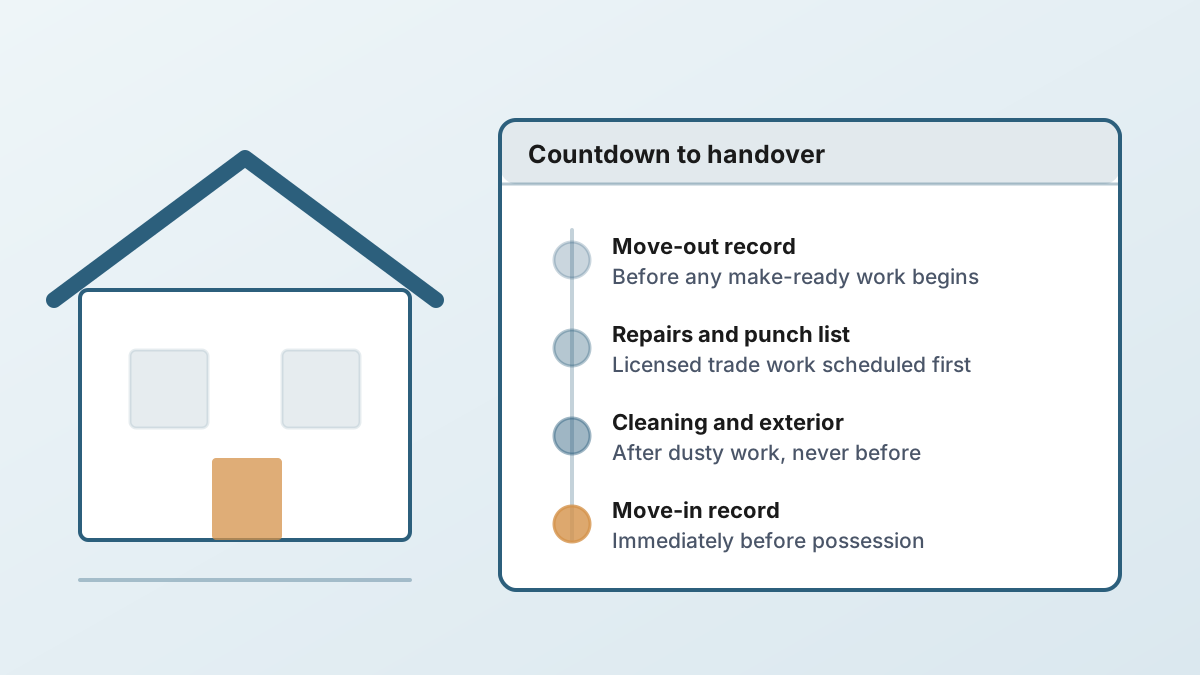
- Days 1–2: documentation and clear-out at move-out, before any work begins
- Then repairs, punch-list items, and any general property work within scope — protected work first, so a delay does not cascade
- Then cleaning, because cleaning after dusty work is the only order that makes sense
- Then exterior presentation — grounds, walkways, entry, and any exterior cleaning
- Then a final readiness pass and the move-in condition record
- Then handover — with the gap between the final pass and handover kept as short as possible
Anything involving a licensed trade should be scheduled earliest of all, because that is the work most likely to slip and the work that blocks everything after it.
3. The Make-Ready Walkthrough
The make-ready walkthrough is where the punch list comes from. Walk the property in a fixed sequence and record items as you go, rather than trying to hold them in memory.
What the walkthrough should produce:
- A list of every task needed, each specific enough to act on without a follow-up question
- A separation of items into general property work and items requiring a licensed trade
- Dated photographs of visible conditions, including anything pre-existing
- An explicit note of what is out of scope, so the boundary is clear before work starts
- A second pass at the end, to confirm each item was completed against the list
That last step matters more than it sounds. A punch list that is never re-walked is a list of intentions.
4. Cleaning and Exterior Presentation
Cleaning is the step tenants judge most directly, and it is the step most often compressed when a timeline tightens. It is worth protecting.
- Clean after all dusty work is finished, never before
- Include the areas tenants notice first: entry, bathrooms, kitchen, and inside appliances
- Include the areas tenants notice when they move in: inside cabinets, closets, and the laundry area
- Clear the exterior of debris, leftover items, and anything left by the previous occupant
- Address walkways, entry, and visible surfaces, which set the first impression before anyone opens the door
- Where the exterior has visible buildup, exterior cleaning is often the single highest-impact item for the effort
5. What Should Be Repaired Before Move-In, and What Can Wait
Not everything found on a walkthrough needs to be solved before handover. Sorting by consequence rather than by visibility is what keeps a turnover deadline achievable.
Address before move-in:
- Anything affecting water, power, heating, or cooling
- Anything affecting safety — locks, doors that do not secure, visible detector concerns
- Anything that would prevent the tenant from using the property as intended
- Anything the tenant was promised as part of the lease
- Anything that will visibly worsen if left
Can be scheduled after move-in:
- Cosmetic items the tenant has not been promised
- Non-urgent improvements that require access and can be arranged with notice
- Seasonal or exterior work with a weather-dependent window
Where an item genuinely requires a licensed trade — plumbing, electrical, HVAC, roofing, structural, pest control, or mold assessment — it should be identified as such and scheduled with an appropriately qualified professional rather than folded into general property work.
6. Documentation Before the Tenant Takes Possession
The move-in condition record is the baseline for the entire tenancy. Take it immediately before handover, not during the make-ready process, so it reflects what the tenant actually receives.
- Use the same walkthrough sequence and the same angles every time, so comparisons at move-out are straightforward
- Photograph every room, plus the exterior and any outdoor structures
- Record visible pre-existing wear or damage with something for scale where size matters
- Note utility meter readings and detector presence and dated status where that is part of your standard
- Record keys and access credentials provided, and how many
- Describe visible conditions rather than diagnosing causes — the cause is not something general property documentation establishes
- Store the record by property and date, and retain it past the end of the tenancy
7. Handover Details Tenants Notice
The last items are small, and they are the ones that generate early phone calls when they are missed.
- Confirm utilities are connected and in the tenant's name where that is the arrangement
- Confirm every lock works, and that the tenant's keys match the locks actually installed
- Confirm the property is empty of the previous occupant's possessions and any contractor material
- Confirm fixtures, filters, and consumables are in the state you told the tenant to expect
- Give the tenant the access details for the community, gate, or building where applicable
- Tell the tenant how to report a maintenance issue, and to whom
None of this is glamorous. All of it is what separates a handover a tenant describes as smooth from one they describe as rushed.
8. Preparing a Rental for New Tenants Checklist
- Define what move-in ready means for your portfolio, in writing
- Set the real deadline a few days before the lease start date
- Document condition at move-out before any work begins
- Schedule licensed trade work first, since it is most likely to slip
- Complete the make-ready walkthrough and record every item
- Separate general property work from licensed trade items
- Re-walk the punch list to confirm each item was completed
- Clean only after all dusty work is finished
- Include inside appliances, cabinets, and closets in cleaning
- Clear leftover possessions and contractor material completely
- Address exterior presentation, walkways, and entry
- Resolve anything affecting water, power, safety, or comfort before handover
- Schedule cosmetic and non-urgent work after move-in
- Take the move-in condition record immediately before possession
- Use the same sequence and angles every time for comparability
- Record meter readings, detector status, and keys issued
- Confirm utilities, locks, and community access on the day
- Keep the condition record past the end of the tenancy