
1. What Is Property Condition Documentation?
Property condition documentation is an organized visual record of the accessible areas included in an agreed service scope. It typically combines written notes and, when authorized, photographs to record what can be seen in each room and exterior area at a specific point in time.
Documentation is not a home inspection, an appraisal, a code-compliance check, or a certification of any kind. It does not involve opening walls, running diagnostic tests, operating systems beyond a basic visual observation, or accessing concealed spaces. It is a practical tool for communication — not a forensic report or a legal determination.
Suncoast provides property condition documentation as a field service, distinct from the work of a licensed home inspector, engineer, or other regulated professional.
Need organized move-in or move-out documentation?
Suncoast provides dated photographs and written property condition reports throughout Sarasota and Manatee Counties.
Request an Estimate2. Why Documentation Matters
A written record matters because memories fade and photographs without context can be misleading. Organized documentation provides a dated, structured reference that can be consulted later — whether that is weeks later, after a tenant turnover, or during a future ownership transition.
Effective documentation supports several practical goals:
- Clearer communication — owners, property managers, tenants, and service providers work from the same visible record
- Better property records — a dated timeline of visible conditions across occupancy changes, maintenance events, and seasonal transitions
- Improved turnover planning — visible concerns are documented so the owner can decide what needs cleanout, cleaning, repair, or licensed-professional attention
- Service coordination — the documentation can be used to scope approved follow-up work without a separate walkthrough for each trade
Documentation does not, by itself, resolve disputes, prove liability, or determine legal outcomes. It is one piece of the property record — useful, but not definitive.
3. What to Record Before Move-In
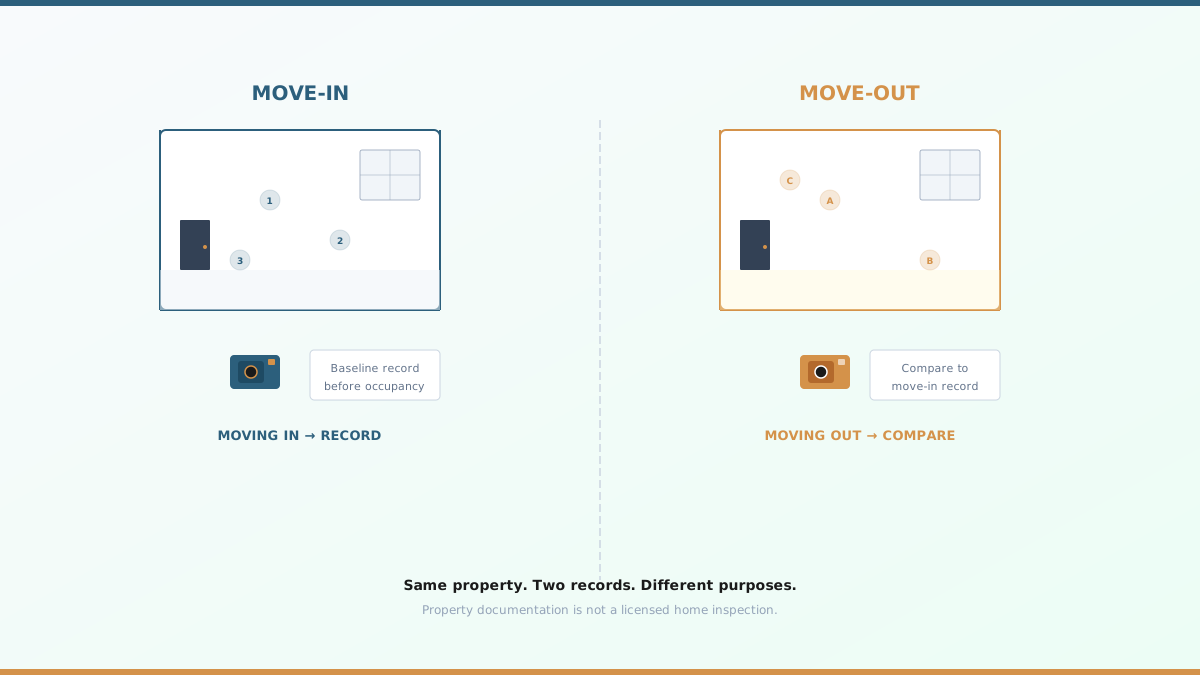
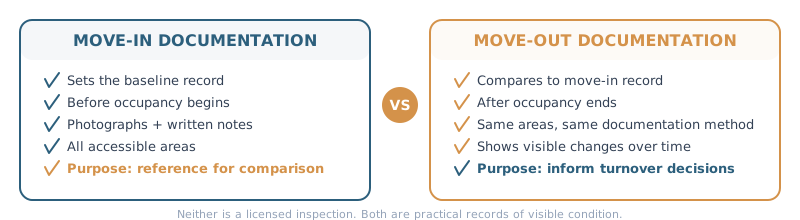
Move-in documentation creates a baseline visual record before a new occupant takes possession. This record helps all parties understand what the property looked like at the starting point of the occupancy period.
Commonly documented areas and conditions include:
- Room-by-room visible condition — living areas, bedrooms, kitchens, bathrooms, hallways, garages, and other spaces
- Walls and ceilings — visible marks, scuffs, nail holes, cracks, or stains present before occupancy
- Flooring — visible wear, staining, damage, or irregularity by room
- Doors — operation, visible damage, hardware condition
- Accessible windows — visible condition, latches, screens
- Cabinets and countertops — surfaces, hardware, visible wear or damage
- Fixtures — sinks, faucets, lighting, ceiling fans, and visible plumbing connections
- General cleanliness — kitchen, bathrooms, floors, windows, and general living areas
- Existing visible marks, wear, or damage — anything that might later be confused for tenant-caused damage
- Exterior areas included in the service scope — entryways, patios, driveways, walkways
Photographs should be organized by room, include context (not just extreme close-ups), and be labeled with the date and area. A wide-angle shot of each room followed by detail shots of specific conditions provides a more useful reference than isolated detail images alone.
4. What to Record After Move-Out
Move-out documentation captures what the property looks like after the occupant has left and before turnover work begins. This record helps identify what changed, what was left behind, and what work is needed before the next stage.
Key areas to document after move-out include:
- Visible condition changes compared to the move-in record, where a prior record exists
- Belongings left behind — furniture, household items, bagged clutter, boxed materials, garage or storage contents
- Cleanliness observations room by room
- Visible maintenance concerns that were not present or were less severe at move-in
- Clutter and debris that may interfere with cleaning, showing, or repair work
- Exterior presentation — entryways, patios, driveways, visible exterior staining, gates
- Areas needing turnover work — cleaning, patching, painting, hardware replacement, fixture repair
Move-out documentation does not answer the question of who is responsible for changes or what should be deducted from a security deposit. It simply records what is visible, when it was observed.
Move-In vs. Move-Out Documentation
5. Photographs and Written Notes
Good property documentation relies on both photographs and written notes — neither is sufficient alone. A photograph can show a stain on the carpet but without a note indicating the room, date, and whether it was present at move-in, the image provides limited context.
Effective documentation practices include:
- Organization by room or area — photographs and notes are grouped so the reader can review one room at a time, not jump between unrelated images
- Date and area labels — each photo or section of notes identifies the room, date of observation, and relevant context
- Room consistency — the same rooms and exterior areas are documented across multiple visits, making before-and-after comparison easier
- Context, not just close-ups — a close-up of a wall scratch without a wider shot showing which wall, in which room, reduces the usefulness of the record
- Descriptive notes, not conclusions — notes describe what is visible ("four-inch scratch on the hallway wall near the second bedroom door") rather than drawing conclusions ("tenant caused damage in hallway")
Well-organized documentation is a practical communication tool. It does not promise to be legally conclusive, and it should not be presented as such.
6. What Property Documentation Does Not Determine
One of the most important things to understand about property condition documentation is what it does not do. Suncoast provides visual records — not legal or professional determinations.
Property documentation does not determine:
- Tenant liability — who is responsible for a given condition
- Normal wear and tear — what constitutes expected aging versus damage
- Causation — what caused a visible condition
- Security-deposit deductions — whether, or how much, a tenant should be charged
- Lease violations — whether a lease term has been breached
- Habitability — whether the property meets legal standards for occupancy
- Code compliance — whether the property conforms to building codes
- System safety — whether electrical, plumbing, HVAC, or structural systems are operating safely
- Workmanship quality — whether repair, renovation, or maintenance work was performed correctly
These determinations require the authority and qualifications of the appropriate party — a landlord (within the bounds of the law), a property manager, an attorney, a licensed inspector, a code official, or another qualified professional. Suncoast documents what is visible; responsibility, liability, and legal conclusions are decided elsewhere.
7. Using a Client-Provided Checklist
Many property managers, landlords, and real estate professionals have their own checklists for move-in and move-out documentation. These checklists may be designed around specific lease terms, company policies, or recurring property types.
When Suncoast provides documentation services, a client-provided checklist can often be incorporated into the agreed service scope. This allows the documentation to follow the format the owner or manager already uses while benefiting from standardized field documentation practices, organized photography, and consistent room-by-room coverage.
If a client does not have a checklist, Suncoast uses an organized property-documentation format that covers the commonly recorded areas and is designed to be easy to review.
8. Turning Documentation Into a Turnover Plan
Documentation is most useful when it leads to action. Once the visible conditions have been recorded, the owner or property manager can review the findings and decide what happens next.
Common next steps that emerge from move-out or turnover documentation include:
- Cleanout — remove abandoned furniture, household items, clutter, and approved debris
- Cleaning — address visible cleanliness concerns room by room
- Minor repairs — patch walls, tighten hardware, adjust doors, replace visible damaged items
- Exterior cleaning — pressure wash driveways, walkways, patios, and entryways where visible staining or debris is present
- Licensed-professional evaluation — refer electrical, plumbing, HVAC, roofing, structural, or environmental concerns to the appropriate licensed provider
- Completion documentation — record the visible status after approved work is completed
Suncoast can coordinate many of these services, reducing the need for the owner to manage separate vendors for cleanout, maintenance, exterior cleaning, and documentation. Specialized or regulated work is referred to the appropriate licensed professional.
9. Completion Documentation
After approved turnover, maintenance, or cleanout work is completed, a final round of visual documentation provides a record of the property’s updated condition. This is often referred to as completion documentation.
Completion documentation typically includes:
- Before-and-after photographs showing visible changes where before photos are available from the same visit or service scope
- Visual status updates for areas where authorized work was completed
- Notes on any remaining visible concerns
- Areas that were not accessed or not included in the approved work scope
- Recommended follow-up items — for example, referring a remaining concern to a licensed professional
Completion documentation provides a visible record that work was done but does not certify workmanship, code compliance, the quality of licensed-trade work, system performance, or readiness for legal occupancy. It is a practical communication tool, not a certification.
10. Move-In and Move-Out Documentation Checklist
The following checklist organizes common documentation items for move-in and move-out visits. Every property is different, and items should be adjusted to the specific property, client requirements, and service scope.
Before the Visit
- Access confirmed (keys, lockbox, gate codes)
- Occupancy status verified
- Client checklist or documentation scope reviewed
- Photography expectations confirmed (included or not)
- Areas to be documented listed and agreed
- Utility status confirmed where relevant
Room-by-Room Documentation
- Living areas — walls, ceilings, floors, fixtures, visible marks
- Bedrooms — walls, ceilings, floors, doors, closets
- Kitchen — cabinets, countertops, sink, visible plumbing, appliances
- Bathrooms — fixtures, surfaces, visible plumbing, cabinets, mirrors
- Hallways — walls, floors, visible damage or marking
- Garage — walls, floor, doors, visible storage conditions
- Laundry areas — visible connections, surfaces, appliance condition
- Accessible storage spaces — shelves, walls, visible contents
Exterior Documentation
- Entryways — doors, lighting, visible surfaces
- Patios and lanais — surfaces, screens, visible fixtures
- Driveways and walkways — visible cracking, staining, debris
- Accessible exterior walls — visible staining, damage, pest entry
- Garage doors — operation, visible condition
- Fences and gates — condition, function, visible deterioration
- General exterior cleanliness, debris, and presentation
Move-Out Specific Items
- Abandoned belongings inventoried
- Furniture left behind documented
- Boxes, clutter, and debris noted
- Cleanliness assessed room by room
- Visible maintenance concerns compared against move-in baseline (where available)
- Items requiring cleanout flagged for owner review
Completion Documentation
- Before-and-after photographs where applicable
- Visual status updates for completed approved work
- Remaining visible concerns documented
- Areas not accessed or not included identified
- Recommended follow-up actions noted
- Documentation package delivered to owner or manager
11. When Professional Documentation Support Helps
Many owners, landlords, and property managers document properties themselves — particularly when they are local, familiar with the property, and have the time to do it carefully. Documentation support from a field-services provider tends to be most valuable in specific situations.
Common use cases include:
- Landlords managing multiple properties — consistent documentation across properties, with organized notes and photographs in a standardized format
- Property managers with full schedules — documentation that can be coordinated with approved cleanout, maintenance, and exterior-cleaning services
- Out-of-state owners and investors — property-condition records without the need to travel, with a single point of contact for documentation and follow-up services
- Real estate professionals preparing a listing — pre-listing documentation, cleanout coordination, and exterior preparation before photography and showings
- Owners preparing for sale, renovation, or a major transition — a dated baseline of visible conditions before work begins, and completion documentation after approved services are finished
In each case, documentation support reduces the number of visits, vendors, and communications the owner or manager needs to coordinate — without replacing the role of a licensed inspector, attorney, property manager, or other qualified professional.