
1. What Belongs on an Exterior Maintenance Walkthrough?
An exterior walkthrough covers everything you can see from outside the building envelope without opening, testing, or dismantling anything. That covers more than most owners expect: exterior walls, trim, painted surfaces, the ground immediately around the structure, drainage paths, and the roof as viewed from ground level.
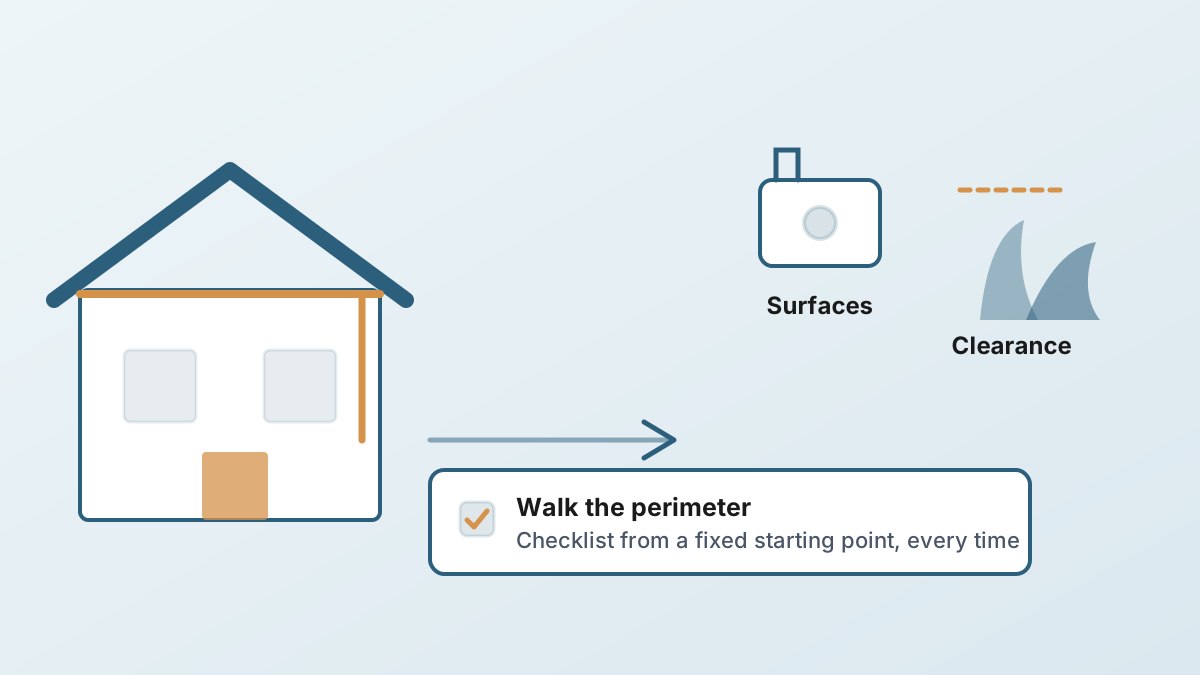
It helps to walk the same route in the same direction every time. A consistent sequence means you notice the thing that changed, because you looked at the same spot last time from the same angle.
The purpose is observation, not repair. You are looking for visible change — new cracking, new staining, new growth, new gaps — and writing it down.
Need help keeping up with exterior maintenance?
Suncoast provides exterior cleaning, minor maintenance, and recurring property care throughout Sarasota and Manatee Counties.
Request Property Service2. How Often Should Exterior Surfaces Be Reviewed?
Twice a year is a reasonable baseline for an inland, owner-occupied property. Three factors shorten that interval:
- Coastal proximity. Properties near the Gulf see more airborne salt and more wind-driven moisture, and exterior surfaces show visible change faster.
- Vacancy. An unoccupied property gets no incidental attention — nobody notices the stain on the way to the car. Vacant properties warrant quarterly review at minimum.
- Heavy tree cover. Shade keeps surfaces damp longer and drops debris onto the roof and into gutters, so both stay wetter and both accumulate faster.
If a property is both coastal and vacant for part of the year, quarterly review during the vacant stretch is the more useful schedule.
3. Walls, Trim, and Painted Surfaces
Exterior wall surfaces and trim are where visible change tends to appear first:
- Paint that is peeling, blistering, or chalky — often an early indicator rather than a cosmetic issue
- Hairline or widening cracks, particularly at corners, around openings, and along the join between wall and foundation
- Visible staining, streaks, or surface growth, which is more aggressive on north-facing and shaded elevations
- Soft or deteriorating trim, especially at the base of walls and around openings
- Visible gaps where different materials meet — wall to trim, trim to opening, wall to utility penetration
- Failed sealant at joints, which opens the building envelope to water
Surface growth on exterior walls is a cleaning matter and responds well to exterior cleaning. Widening cracks, soft trim, and failed seals point to repair work — and depending on the cause, potentially to a licensed trade.
4. Driveways, Walkways, and Patios
Flat exterior surfaces do two jobs in an exterior review: they show their own condition, and they show you where water is going.
- Visible cracking or separation, and whether a crack has widened since the last review
- Uneven sections that could be a trip hazard
- Surface growth that makes the surface slippery when wet
- Standing water after rain, and where that water sits relative to the structure
- Settlement or sinking, particularly near the foundation or utility lines
- Visible deterioration of the material itself — spalling, crumbling, or a surface that has lost its finish
Water that drains toward the structure rather than away from it is worth flagging every time. Over a season, that pattern puts water against the foundation and the base of exterior walls with no one there to notice.
5. Gutters, Drainage, and Water Direction
This is the highest-value section of an exterior walkthrough, and the one most often skipped because it requires looking up.
- Visible blockage — accumulated debris, volunteer growth, or nesting material
- Sections that have pulled away from the fascia or are visibly sagging
- Downspouts that are detached, kinked, or discharging directly against the structure
- Downspout extensions that are missing or directed back toward the building
- Visible staining on the fascia beneath the gutter line, which suggests overflow
- Visible erosion or channeling in the ground below a discharge point, which shows where water is going over time
Florida rain arrives in volume. A gutter system that is functioning moves a large amount of water away from the building; one that is blocked or misdirected deposits it against the structure. This is a routine cleaning matter in most cases — but visible sagging, detachment, or damage to the fascia itself is a repair for the appropriate trade.
6. Roof Condition From Ground Level
Ground-level roof observation is part of a routine exterior review. What you can see from the ground is limited by design — nobody is walking the roof as part of a property care visit, and this is not a roofing inspection.
From the ground, visible items worth documenting:
- Materials that are visibly missing, lifted, displaced, or out of line
- Visible sagging or an uneven line along the roof edge
- Accumulated debris — leaf litter, branches, or anything resting on the surface
- Visible deterioration at flashings around penetrations and where roof planes meet walls
- Staining on the fascia or soffit below the roofline
- Anything growing on the roof surface
Any of these warrants a roofing professional. Suncoast documents what is visible from ground level; determining cause and correcting it is roofing work.
7. Coastal Exposure and Why It Changes the Interval
Properties on the barrier islands and along the immediate Gulf coast — Longboat Key, Siesta Key, and the coastal edges of Venice and Sarasota — experience meaningfully different exterior conditions than inland properties.
The practical differences:
- Airborne salt accelerates visible deterioration of metal components, fasteners, and exterior finishes
- Wind-driven rain reaches surfaces that stay dry at an inland property
- Exterior surface growth establishes faster in the more consistent humidity
- Loose exterior items become a greater concern during storm season
None of this is a claim about structural performance or longevity. It is simply that the visible maintenance interval is shorter near the coast, and a property sitting vacant through a coastal season compounds it.
8. Landscaping and Structure Clearance
Vegetation touching a building is one of the most consistently underrated exterior items. It holds moisture against exterior surfaces, provides a pathway for pests, and — during a storm — becomes a source of impact damage.
- Shrubs, vines, or ground cover in contact with exterior walls
- Tree limbs over or within reach of the roofline
- Vegetation obstructing the visible gutter line or blocking drainage paths
- Volunteer growth in cracks, along fence lines, and in the perimeter of the structure
- Accumulated organic debris resting against the base of walls
- Beds that hold water against the foundation after rain
Tree work — particularly anything involving limbs near the roof or near utility lines — belongs with a licensed tree service. Routine bed maintenance, debris removal, and keeping growth clear of the structure fall within general property care.
9. Exterior Maintenance Checklist
- Walk the same perimeter route in the same direction each review
- Photograph the same angles each time so change is visible
- Check exterior walls for new cracking, staining, or surface growth
- Check trim for peeling, blistering, or soft areas
- Check visible sealant at joints and around openings
- Check driveways and walkways for widening cracks and trip hazards
- Note where water stands after rain and which way it flows
- Check gutters for visible blockage, sagging, or detachment
- Confirm downspouts discharge away from the structure
- Observe roof condition from ground level for missing or displaced materials
- Check flashings and the fascia line for visible staining
- Confirm no vegetation is touching the structure
- Note tree limbs over or near the roofline
- Clear accumulated debris from the immediate perimeter
- Note any exterior lighting that is no longer working
- Write down findings and compare against the previous review
10. When to Call a Licensed Professional
Several items on this list lead directly to licensed work:
- Roofing — anything visible on the roof surface, including missing materials or sagging
- Structural — widening cracks, foundation separation, or visible movement
- Plumbing — any visible exterior leak or staining traced to a line
- Electrical — exterior fixtures, wiring, or outlet concerns
- Tree service — limbs near the roof or utility lines
- Waterproofing or general contracting — recurring water intrusion where the source is not obvious
Suncoast Property Service Group provides exterior cleaning, pressure washing, minor maintenance, and recurring property care within an approved service scope. Where work requires a licensed trade, we can help coordinate authorized property access or recommend that you contact an appropriately qualified professional.