
1. How Often Should a Rental Property Be Checked?
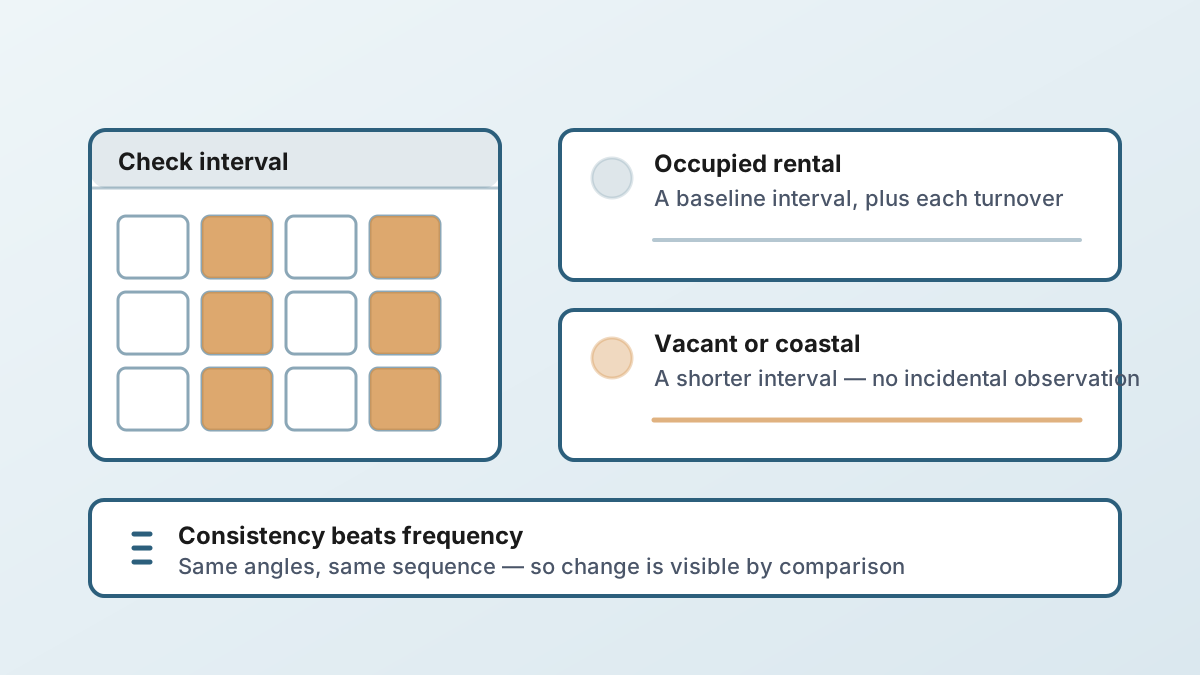
Twice a year for an occupied rental, plus once at each turnover. That gives you a reasonable chance of noticing visible change on a useful timescale without being intrusive for the tenant.
When the property sits empty, the calculus changes. A vacant rental gets no incidental attention from anyone. Nobody is walking past the water heater. So a vacant property warrants a shorter interval — quarterly at a minimum, and more often where the property is coastal or the vacancy coincides with storm season.
There is a straightforward principle underneath the numbers: the interval should be short enough that a developing visible issue is caught while it is still cheap to address.
Managing rentals across the Sarasota–Manatee area?
Suncoast provides scheduled visual checks, recurring property care, and minor maintenance within scope.
Request Property Service2. What Changes the Right Interval?
Several factors genuinely shorten or lengthen the useful interval:
- Occupancy status. The single largest factor. An occupied property gets daily incidental observation. A vacant one gets none.
- Proximity to the coast. Salt air and wind-driven rain accelerate visible exterior change.
- Season. Storm season overlaps summer, which is also when many seasonal rentals sit empty.
- Property age and construction. Newer construction is not automatically lower-maintenance, and older properties have more components at the end of their service life.
- Water-related risk. Properties with irrigation systems, pools, or multiple plumbing fixtures have more places for a slow leak to hide.
- Storm exposure. Properties with significant tree cover or in exposed coastal positions warrant more frequent review during the season.
3. What Belongs in a Routine Check?
A consistent routine is more valuable than a thorough but irregular one. A workable check covers:
- Moisture indicators — ceiling and wall staining, discoloration, warped flooring, unusual odors
- Visible plumbing connections — under sinks, at toilets, at the water heater, at the washing machine supply
- HVAC status — a thermostat showing a reading, air moving at registers, a visibly clean filter
- Exterior perimeter — walls, trim, visible sealant, gutters, and where water is draining
- Vegetation clearance — anything touching or overhanging the structure
- Pest indicators — droppings, entry points, nesting material
- Safety items — visible smoke and carbon monoxide detector presence and dated status
- Overall condition — anything visibly changed since the previous visit
Photographs from consistent angles are what make a check series useful. Two photographs of the same corner, three months apart, tell you something. A single photograph tells you very little.
4. How a Check Differs From an Inspection
This distinction matters, and it is worth being precise about it rather than treating the words as interchangeable.
- A visual property check is a scheduled walkthrough observing accessible, visible conditions, documented with notes and photographs.
- A licensed home inspection is a formal evaluation performed by a licensed inspector, following a professional standard of practice, typically involving testing and access to components a visual check does not touch.
A visual check does not open panels, test systems, access attics or crawlspaces, or evaluate the condition of concealed components. It does not meet the standard of a home inspection, and it does not guarantee that every issue will be found.
None of that makes it less useful for its actual purpose, which is keeping a property from going unobserved. It simply means you should not treat a check as a substitute when an inspection is genuinely what you need.
5. Occupied Rentals and Access
For an occupied rental, the interval is only part of the question — the other part is doing it correctly.
- Review your lease for the access and notice provisions that apply to property visits.
- Give the tenant proper written notice in the form and timeframe the lease and applicable requirements call for.
- Schedule at a reasonable time and keep the visit focused on the property rather than the tenancy.
- Communicate what the visit is for, so it does not read as an intrusion.
- Document visible property conditions — not the tenant's belongings, and not housekeeping judgments.
This guide is general information and not legal advice. Requirements around landlord access vary, and your lease governs in the first instance. Confirm your obligations before scheduling.
6. Vacant Rentals Between Tenants
The interval between tenants is the highest-attention period a rental property has, for two reasons: it is when the property is most likely to be worked on, and it is when it is most likely to sit untouched.
- Document visible condition at move-out, before any make-ready work begins
- Walk the property at the point any work is completed, to confirm it was done as scoped
- Do a final readiness pass immediately before the next occupancy begins
- If the vacancy runs long, shift to a recurring check interval rather than relying on a single visit
A long vacancy is effectively a vacant property situation, and it should be managed with the same recurring approach.
7. Seasonal Rentals in Southwest Florida
Seasonal rental properties in this region have a particular pattern: they are most heavily used during the winter season, and they often sit empty through the summer — which is exactly when humidity is highest and storm season is running.
That pattern argues for:
- A thorough check as the property comes out of season, before it goes quiet
- Regular visits through the summer rather than a single mid-season visit
- Humidity management confirmed at the start of the vacant period, since the air conditioning is doing the work
- A readiness check before the next season begins, with the previous documentation available for comparison
Properties on the barrier islands and along the immediate coast — Longboat Key, Siesta Key, Venice, and the coastal edges of Sarasota — sit at the more exposed end of this pattern.
8. Documenting What You Find
A check that is not documented is a check whose value expires immediately. The record is what turns a series of visits into something you can actually act on.
- Date every visit and every photograph
- Shoot the same angles each time so change is visible by comparison
- Write short notes on anything that differs from the previous visit, rather than a general description of the property
- Note items you are flagging for a licensed trade, and whether you acted on them
- Store records where they are reachable from anywhere, not only on one device
- Keep the record across tenancies, since a documented baseline is useful years later
This is also where documented condition records help at a turnover — having a dated baseline from the start of a tenancy makes the end-of-tenancy comparison considerably clearer.
9. When to Call a Licensed Professional
Any visible finding in the categories below belongs with a licensed trade:
- Plumbing — any leak or staining traced to a water source
- HVAC — a system that will not satisfy the thermostat, or condensate problems
- Electrical — visible wiring concerns or breakers that trip
- Roofing — visible roof material issues or ceiling staining traced upward
- Structural — widening cracks or movement
- Pest control — confirmed activity, for treatment and exclusion
Suncoast Property Service Group provides scheduled visual property checks, recurring property care, minor maintenance within scope, and property condition documentation. Where work requires a licensed trade, we can help coordinate authorized property access or recommend that you contact an appropriately qualified professional.