
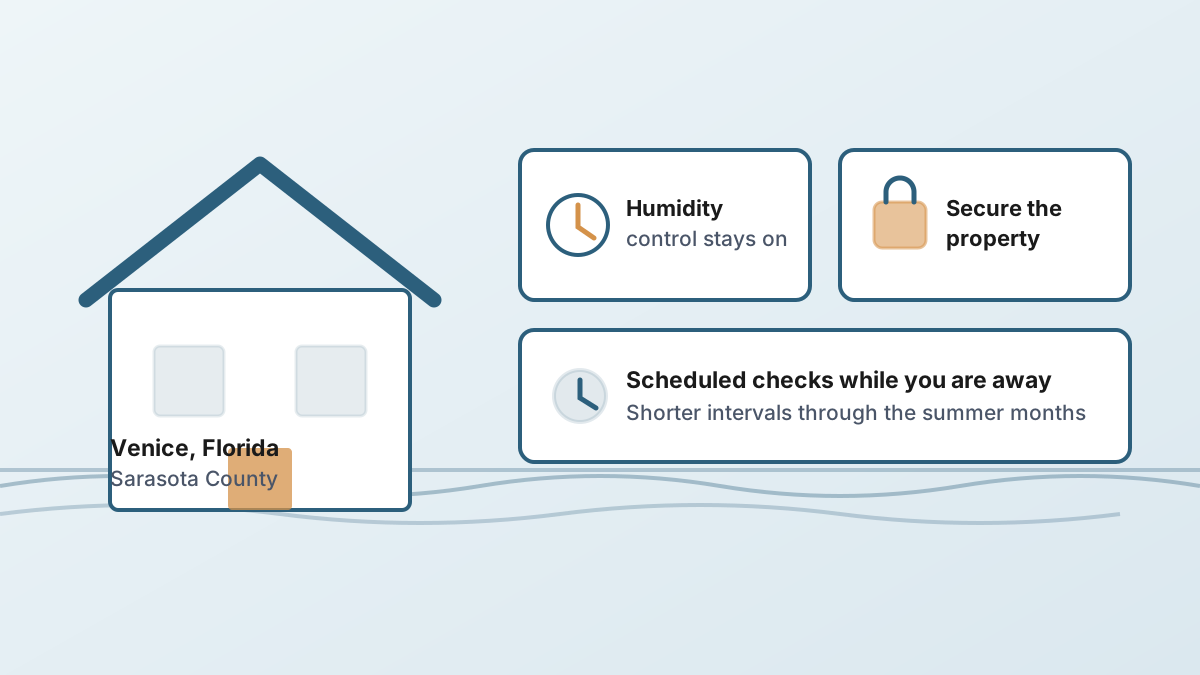
1. Why Venice Homes Have a Particular Seasonal Pattern
Venice sits at the southern end of Sarasota County, with the historic downtown and island areas close to the water and a large share of housing stock that is either seasonal or held as a second home. That creates a specific pattern: the property is heavily used from roughly November through April, and then sits empty or lightly used through the hottest and wettest part of the year.
Three consequences follow from that pattern:
- The empty period is the high-risk period. Humidity, rain, and storm season all overlap with the months the house is quiet.
- Problems develop unwatched. An occupied home gets incidental observation every day. An empty one gets none at all.
- Proximity to the coast shortens the timescale. Salt air, wind-driven rain, and sun exposure accelerate visible exterior change compared with inland property.
None of this is dramatic. It simply means that the departure routine for a Venice home should be built around the summer, not around the winter you are leaving for.
Leaving a Venice property for the season?
Suncoast provides scheduled visual property checks and recurring property care throughout Venice and Sarasota County.
Request Property Service2. Before You Leave: The Departure Walkthrough
The departure walkthrough is the single most valuable hour you can spend on a seasonal property. Do it room by room in a fixed order rather than from memory, and give yourself two weeks' notice so anything requiring a trade can be arranged before you go.
Work through these in sequence:
- Water. Where practical, shut off the main supply, and consider whether the irrigation should be reduced rather than left on its usual schedule.
- Humidity. Confirm the air conditioning is set to run and will continue to run — in a Florida summer, the system is doing the dehumidifying, not just the cooling.
- Signs of existing moisture. Look at ceilings, walls, and under sinks before you leave, so you have a baseline to compare against later.
- Exterior. Clear gutters and drains, check that water drains away from the structure, and trim anything touching or overhanging the building.
- Loose items. Bring in or secure outdoor furniture, planters, and anything that could move in high wind.
- Openings. Confirm windows, doors, and the garage are secured.
- Utilities and services. Decide what stays on — particularly anything supporting humidity control — and note what you have left running.
- Access. Confirm whoever is checking the property can actually get in, and that any code you provide can be changed when the arrangement ends.
3. Humidity and the Closed-Up House
Humidity is the issue that catches out-of-state owners most often, because it behaves differently here than in a northern climate. A closed house in a Florida summer with no air movement and no dehumidification will develop visible moisture indicators over a season — and those indicators are usually noticed months after they began.
- Keep the air conditioning running on a set point that manages humidity, not on an energy-saving setpoint that lets the house sit warm and damp
- Check the condensate path before you leave — a blocked drain line is a common source of visible water damage
- Confirm filters are clean at departure, and that someone will change them if the vacancy runs long
- Consider interior air circulation in rooms that get no airflow, particularly closets and closed-off bedrooms
- Be aware that a power interruption during the vacancy stops all of the above at once, which is one more reason scheduled visits matter
A scheduled check is what tells you whether humidity control is actually still working. Without one, you find out when you return.
4. Exterior and Storm-Season Preparation
Exterior preparation for a Venice property is mostly about water and wind — where water goes, and what wind can move.
- Clear roof drainage and ground-level drains so heavy rain has somewhere to go
- Check that the ground slopes away from the structure rather than toward it
- Trim vegetation back from the walls, roof line, and any outdoor equipment
- Secure or store anything loose — furniture, grills, planters, and similar items
- Note the visible condition of the roof, screening, and exterior paint before you leave, so change is measurable on return
- Photograph the exterior from consistent angles at departure — those images are what makes an arrival comparison meaningful
This guide does not make claims about any specific storm, forecast, or regulatory requirement. Storm preparation decisions should follow the current guidance from official sources and, where structural work is involved, a licensed professional.
5. What to Arrange While You Are Away
An empty property needs someone to look at it. How often depends on the property and the season, but a sensible baseline for a coastal or seasonal home through the summer is quarterly at minimum, and more often where the property is directly on or near the water.
What to put in place before you leave:
- A named person or service checking the property on a defined schedule, not on an informal basis
- Confirmation that the checks include photographs from consistent angles, so change is visible by comparison
- An agreed escalation path — who is contacted if a check turns up something that needs attention
- Access that works, with a code or key that can be revoked when the arrangement ends
- A written record of what was left running at departure, so a check can confirm it still is
- A plan for the possibility of a power interruption, which stops humidity control without any outward sign
Scheduled visual checks are not a substitute for a licensed inspection, and they do not guarantee that every issue will be found. Their purpose is narrower and still valuable: making sure the property is not sitting completely unobserved for months at a time.
6. Returning: The Arrival Walkthrough
The arrival walkthrough is most useful when you have the departure record to compare against. Without it, you are assessing condition from memory.
- Walk the same sequence you used at departure, room by room
- Compare against your departure photographs before deciding anything looks unchanged
- Test water at each fixture and check under sinks before assuming the system is sound
- Confirm cooling is responding and that the humidity setpoint held through the summer
- Check the exterior perimeter — roof line, screening, paint, and drainage — against your departure images
- Air the property and address any odor before judging anything else, since odor is a symptom rather than the problem
- Record anything visibly changed, and flag anything that needs a licensed trade
7. What a Visual Check Can and Cannot Do
This distinction matters, and it is worth being precise rather than treating the words as interchangeable.
- A visual property check is a scheduled walkthrough observing accessible, visible conditions, documented with notes and photographs.
- A licensed home inspection is a formal evaluation performed by a licensed inspector following a professional standard of practice, typically involving testing and access to components a visual check does not touch.
A visual check does not open panels, test systems, access attics or crawlspaces, or evaluate concealed components. It does not establish the cause of anything it finds. That is not a shortcoming of the approach — it is the definition of the service.
Any visible finding relating to plumbing, electrical, HVAC, roofing, structure, pest activity, or mold belongs with an appropriately qualified professional.
8. Venice Seasonal Home Checklist
- Start the departure routine about two weeks before leaving
- Shut off the main water supply where practical
- Reduce or redirect irrigation rather than leaving the usual schedule
- Set air conditioning to manage humidity, not to save energy
- Check the condensate drain path for blockages
- Fit clean filters and arrange for replacement if the vacancy runs long
- Look for existing moisture indicators so you have a baseline
- Clear gutters, roof drainage, and ground-level drains
- Confirm the ground slopes away from the structure
- Trim vegetation clear of walls, roof, and equipment
- Bring in or secure outdoor furniture, grills, and planters
- Confirm windows, doors, and the garage are secured
- Photograph the interior and exterior from consistent angles
- Note everything you left running
- Arrange a named person or service to check on a defined schedule
- Set checks at quarterly or shorter through the summer
- Agree an escalation path for anything a check turns up
- Confirm access works and can be revoked later
- On return, compare against your departure photographs
- Test water at each fixture before assuming the system is sound
- Flag anything needing a licensed trade to an appropriately qualified professional