
1. Why a Departure Checklist Matters
A departure checklist helps Florida property owners:
- Document visible property conditions before an extended absence so there is a baseline for comparison upon return
- Identify items that should be checked or addressed before leaving — things that are easier to handle now than from a distance
- Provide clarity for someone else watching or checking on the home while the owner is away
- Meet any insurer or association requirements related to extended-vacancy notification or maintenance expectations
- Keep all departure-related tasks in one organized record, reducing the chance that something is forgotten
Need help preparing your home for an extended departure?
Suncoast provides vacant property checks, departure documentation, and recurring home watch services throughout Sarasota and Manatee Counties.
Request an Estimate2. Document Property Conditions Before Leaving
Before a long absence, documenting visible property conditions creates a reference that can be useful for insurance purposes, for comparison upon return, or for someone checking the property while the owner is away.
Documentation that is particularly helpful to have on hand:
- Dated photographs of every room showing walls, ceilings, floors, appliances, and accessible plumbing connections
- Exterior photographs — front and back elevation, sides of the home, roof (from ground level), driveway, walkways, patios, lanais
- Photographs of any existing visible damage, staining, or wear — cracks, water marks, ceiling discoloration, or other visible items
- Written notes describing any known maintenance items, ongoing concerns, or upcoming work that is planned
- Photographs of landscaping, fences, and any outdoor equipment present on site
- Digital records stored in a location accessible from anywhere
3. Interior Observations Before a Long Departure
A walkthrough of the interior before departure can catch visible items that would be harder to address from a distance. Items to observe and document:
- Kitchen — visible condition of sink areas, cabinets, counters; no visible leaks or moisture indicators; no unusual odors
- Kitchen — refrigerator and freezer cleaned of perishable items; door seal appears intact (not gapped or damaged)
- Bathrooms — visible condition of sinks, toilets, tubs, and showers; no standing water; no visible leaks or staining
- Interior walls and ceilings — note any visible staining, new cracks, peeling paint, or warped surfaces
- Flooring — note any visible warping, staining, or damage
- Windows and accessible doors — latched, no visible seal gaps or broken panes; no visible insect or pest entry points
- Thermostat — confirm the display shows a reading; set it to an appropriate departure temperature (typically in the low-to-mid 80s in Florida during warmer months to help manage indoor humidity while conserving energy)
- Water supply — confirm hose connections, visible supply lines, and any accessible shut-off valves are not leaking
If any of these observations suggest a system concern — HVAC, plumbing, electrical, or structural — contact the appropriate licensed professional before leaving.
One item worth particular attention: water supply. Even a small leak that goes unnoticed for weeks or months can cause significant damage while a property is unattended. Checking visible connections under every sink, around every toilet, and at any accessible water-heater connections before departure is one of the highest-return tasks on any departure walkthrough.
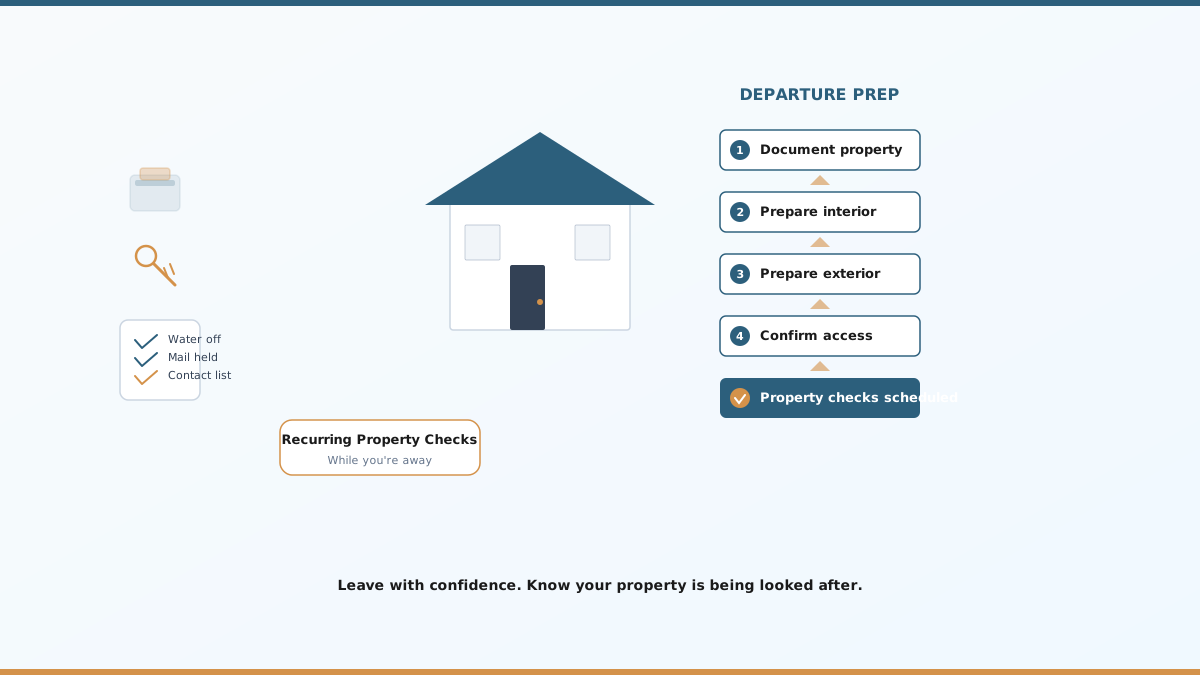
Departure Planning Flow

4. Exterior Observations Before a Long Departure
Exterior conditions matter for security, insurance, and return-readiness. Items to check and document before leaving:
- Entryway — clear of obstructions, visible hardware intact, door swings and latches properly
- Walkways and driveway — free of trip hazards, visible cracking, or significant debris
- Exterior walls — note any new visible cracking, staining, or surface growth that may have appeared since the last review
- Visible roof condition from ground level — note any missing or displaced materials, visible sagging, or debris accumulation
- Gutters and visible downspouts — note any visible blockage or detachment
- Landscaping — note any vegetation touching the structure; confirm all plant beds are within expected bounds
- Outdoor furniture and loose items — secured, stowed, or removed depending on season and storm-exposure risk
- Fences and gates — visible damage, proper latching, no sections displaced
5. HVAC and Utility Considerations
Florida's climate means the HVAC system and utilities deserve specific attention before a long departure:
- Ensure the thermostat is set appropriately — typically in the low-to-mid 80s in warmer months to help manage humidity while conserving energy (consult the system manufacturer or a qualified HVAC professional for guidance specific to the property and system)
- Confirm the thermostat display is on and showing a reading without any obvious error indicator
- If the property uses a programmable or smart thermostat, verify the schedule is active and appropriate
- Sprinkler or irrigation system — confirm it is set to an appropriate schedule or turned off if irrigation is not needed during the absence
- Water heater — no visible leaks and appears to be in normal operation based on a visible check (not a system diagnosis)
- Water supply — consider having someone planned to check the property after a freeze if the property will be unattended during cold weather
6. Arranging a Visit Plan for the Home While Away
A recurring visit plan is one of the most important departure preparations. For extended absences, having scheduled visits provides ongoing awareness of visible conditions:
- Confirm the visit frequency — weekly, biweekly, or monthly based on property, season, insurer, or association requirements
- Identify what should be documented during each visit — exterior appearance, visible interior conditions, any changes since the last visit
- Define communication expectations — how and when findings are shared with the owner
- Discuss authorized follow-up actions — what can be addressed as part of the visit plan and what requires owner or manager approval
- Plan for storm preparation and post-storm checks if the departure falls during hurricane season
Suncoast’s Vacant Property Checks & Home Watch service provides scheduled visual property visits with organized documentation and communication while owners are away.
7. Insurance Notifications and Policy Awareness
Some insurance policies have requirements related to extended property vacancies. Before a long departure, owners should review their specific policy and communicate with their insurer directly.
- Check the policy for any notification requirement regarding extended absences or vacancy periods
- Confirm whether the policy requires periodic interior and exterior checks during an extended absence
- Verify documentation requirements — some policies specify that dated photographs and written visit records should be maintained
- Understand what is and is not covered during extended vacancy periods
Suncoast does not provide insurance advice. Policyholders should discuss coverage details, vacancy requirements, and documentation expectations directly with their insurance agent or provider.
8. Service Provider and Emergency Contact Lists
Before a long departure, an organized contact list helps the person checking the home (or the owner, from a distance) know whom to call in different situations.
A helpful contact list might include:
- Property owner and any authorized local contacts
- Insurance agent or provider contact information
- Association or property-management office (if applicable)
- Preferred service providers — the company or individual scheduled to visit the property
- Licensed professionals for specific trades — HVAC, plumber, electrician, roofer, pest control
- Emergency contacts — local fire, police, and any municipal reporting line
- Utility providers — power, water, gas, and any telecommunications or security-service contact
A printed copy left at the property and a digital copy accessible from anywhere ensures the information is available when needed.
For properties with smart devices — internet-connected thermostats, doorbell cameras, water sensors — note which devices are active, how they are monitored, and who has access credentials during the departure period. If a device sends an alert while the owner is traveling internationally without data service, someone local should also receive that notification.
9. Departure Checklist
The checklist below organizes departure preparations into a single reference. Adjust the list to each property’s specific configuration, occupancy status, season, and insurance or association requirements.