
1. Why Vacant Florida Homes Develop Problems Differently
Most of what goes wrong at an occupied home announces itself. A dripping faucet gets heard. A stain on a ceiling gets noticed on the way to bed. A soft spot in a floor gets felt.
At a vacant home, none of that happens. The failure mechanism is the same, but the feedback loop is gone. Two climate factors make that worse in Florida specifically:
- Humidity. Florida air holds substantial moisture year round. In an occupied home, air conditioning and normal air movement manage it. In a vacant home with the system off, interior humidity has nowhere to go.
- Rainfall volume. Florida receives heavy rain in concentrated events. A small exterior breach that would stay minor in a drier climate can admit a meaningful amount of water in a single afternoon.
The practical consequence is that the interval between checks matters more than the intensity of any single inspection. Three visits across a season will catch things one visit cannot.
Own a property that sits empty part of the year?
Suncoast provides scheduled visual property checks and recurring visits throughout Sarasota and Manatee Counties.
Request Property Service2. Moisture and Humidity Indicators
This is the category that causes the most damage at vacant Florida homes, and it is also the category with the most visible early warnings.
Visible indicators worth documenting on every visit:
- Ceiling staining, discoloration, or a change in texture — often the first visible sign of a roof or plumbing matter above
- Warping, cupping, or lifting of flooring, particularly near fixtures and exterior doors
- Peeling or bubbling paint on interior walls, which can indicate moisture behind the surface
- Musty or unusual odors on entry, which is itself a signal even when nothing is visibly wrong yet
- Condensation on interior windows that does not clear
- Visible staining around the base of toilets, sinks, and the water heater
- Soft or spongy-feeling surfaces at the base of walls, though this is a tactile observation rather than a visual one
None of these require a licensed professional to notice. All of them warrant attention from one if they appear — because each points to a source that will keep running while the home is empty.
One failure pattern deserves specific mention: a refrigerator water line. It is a small, pressurized connection in a location nobody looks at, and it can run slowly for weeks. If a refrigerator stays running during a vacancy, that line is worth a visible check on every visit.
3. Water Intrusion From the Exterior
Florida rain arrives with force and volume. The building envelope has many places where it can be compromised, and an empty home gives intruding water more time to do damage.
Common exterior entry points to observe:
- Visible gaps or deterioration around exterior door frames and thresholds
- Window seals that are visibly gapped, shrunk, or separated
- Visible cracking in exterior wall surfaces, particularly around openings
- Gutters and downspouts that are blocked, detached, or discharging directly against the structure
- Roofing materials visibly missing, lifted, or displaced when viewed from ground level
- Exterior penetrations — vents, hose bibs, utility entries — where sealant has visibly failed
- Standing water or poor drainage in the immediate perimeter of the home
A visual check can identify that water is getting in. Determining why, and correcting it, is work for the appropriate licensed trade — roofing, waterproofing, or general contracting depending on the source.
4. Pest and Wildlife Activity
An unoccupied home is an undisturbed home, which is precisely the condition pests prefer. Florida's climate supports year-round pest activity, so a vacant property does not get a reprieve in the colder months the way it would further north.
Visible signs a visual check can document:
- Droppings in corners, along walls, in cabinets, or on stored surfaces
- Visible entry points — gaps around utility penetrations, damaged screens, compromised weatherstripping
- Nesting material in exterior fixtures, vents, or under eaves
- Damage to stored items, packaging, or soft materials
- Visible insect activity around sinks, drains, and any moisture source
- Evidence of wildlife access at roof lines, soffits, or crawlspace vents
Visual observation can document what is present and where it appears to be entering. Treatment and exclusion work is a pest-control matter for a licensed provider — Suncoast does not provide pest control or remediation, and a property check is not a pest inspection.
5. Landscaping and Exterior Overgrowth
Vegetation keeps growing whether or not anyone is home. In a Florida climate with regular rain, growth is fast, and an overgrown property is both a maintenance issue and a clear signal that nobody is around.
- Lawn growth beyond a maintained appearance
- Vegetation touching or overhanging the structure — a common pathway for pests and a source of surface moisture
- Tree limbs over or near the roofline
- Visible surface growth on exterior walls, driveways, and walkways, which is more aggressive in humid conditions and near the coast
- Volunteer growth in beds, cracks, and along fence lines
- Accumulated debris in the perimeter, which holds moisture against the structure
Exterior cleaning and landscape maintenance address this directly and are reasonable to include in a recurring care plan rather than handling in one large catch-up effort on return.
6. The Signs of Absence Itself
This is less a property-damage category than a risk category, and it is worth naming because it is the one owners tend to think about most.
- Mail and packages accumulating at the entry
- Lawn and landscape that visibly stop being maintained
- Exterior lighting that never changes
- Uncollected debris, flyers, or notices left at the door
- Vehicles that never come or go
A recurring visit plan addresses most of this as a byproduct — someone is regularly present, the property is regularly maintained, and anything left at the door gets collected. Suncoast does not provide security monitoring or emergency response, and a property check is not a security service. But visible regular presence is a practical deterrent, and it is a natural side effect of scheduled maintenance visits.
7. What a Recurring Visit Plan Actually Catches
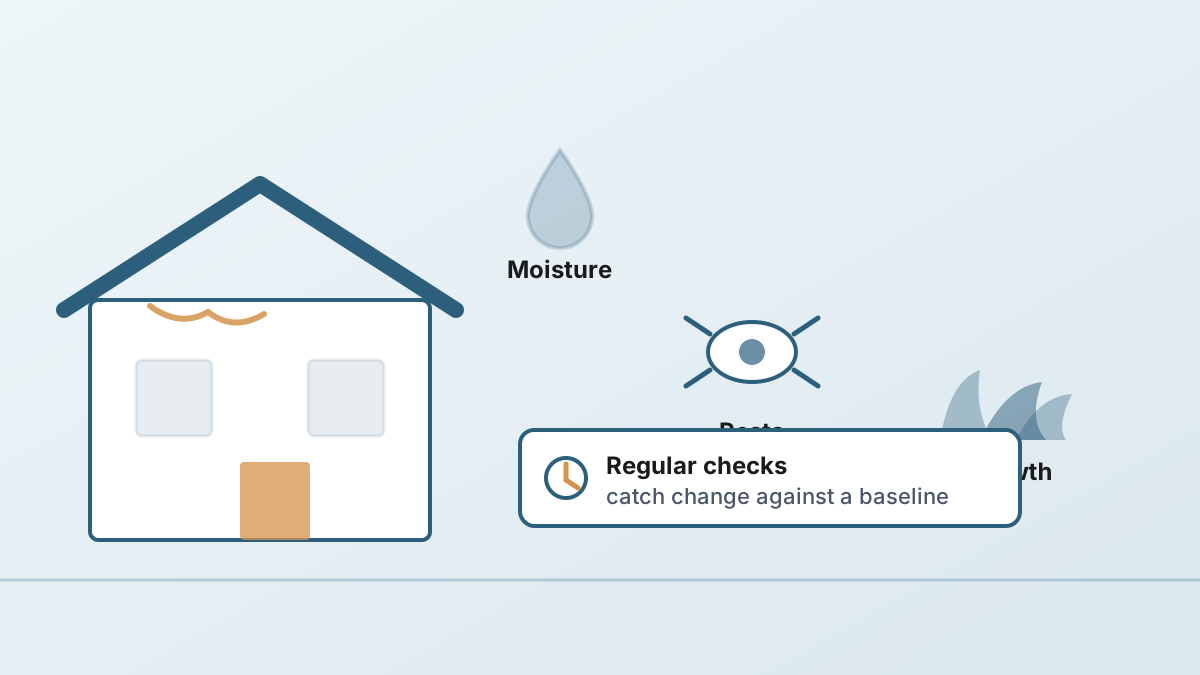
The value of recurring visits is not that any single visit is thorough. It is that changes get compared against a known baseline.
A workable recurring plan usually includes:
- A visit interval matched to the property — more frequent during storm season or at a coastal property, less so for an inland home in a quiet month
- A consistent walkthrough sequence, interior and exterior, so nothing is skipped by habit
- Dated photographs from consistent angles, which is what makes change visible over time
- Written notes on anything that looks different from the previous visit
- An organized report after each visit, delivered the same way every time
- A defined contact path when something visible warrants attention
That combination catches gradual change — the slow ceiling stain, the new crack, the section of flooring starting to cup — which is exactly the category of problem that a once-a-year visit misses entirely.
8. What a Visual Property Check Cannot Do
Being clear about this is part of being useful. A scheduled visual property check is exactly what the name says:
- It is not a licensed home inspection and does not meet the standard of one.
- It does not involve opening walls, testing systems, or inspecting concealed spaces.
- It does not guarantee discovery of every leak, pest issue, defect, or hidden condition.
- It is not mold assessment or remediation.
- It is not a structural, electrical, plumbing, or HVAC diagnosis.
- It is not security monitoring or emergency response.
What it is: a scheduled, documented, visible-condition review that keeps a property from going unobserved for months at a time. For most vacant and seasonal homes, that is the difference between catching something early and discovering it a season later.
9. When to Call a Licensed Professional
Any visible finding in the categories above points toward a licensed trade:
- Plumbing — any water source you cannot isolate, visible supply or drain-line damage
- Roofing — missing or displaced materials, or ceiling staining traced to above
- HVAC — a system that does not respond, or visible condensate and drainage problems
- Electrical — visible wiring concerns or breakers that trip
- Pest control — any confirmed activity, for treatment and exclusion
- Structural or environmental — new cracking, movement, or suspected mold
Suncoast Property Service Group provides property care, scheduled visual property checks, cleanouts, exterior cleaning, recurring property care, and minor maintenance within an approved service scope. Where work requires a licensed trade, we can help coordinate authorized property access or recommend that you contact an appropriately qualified professional.